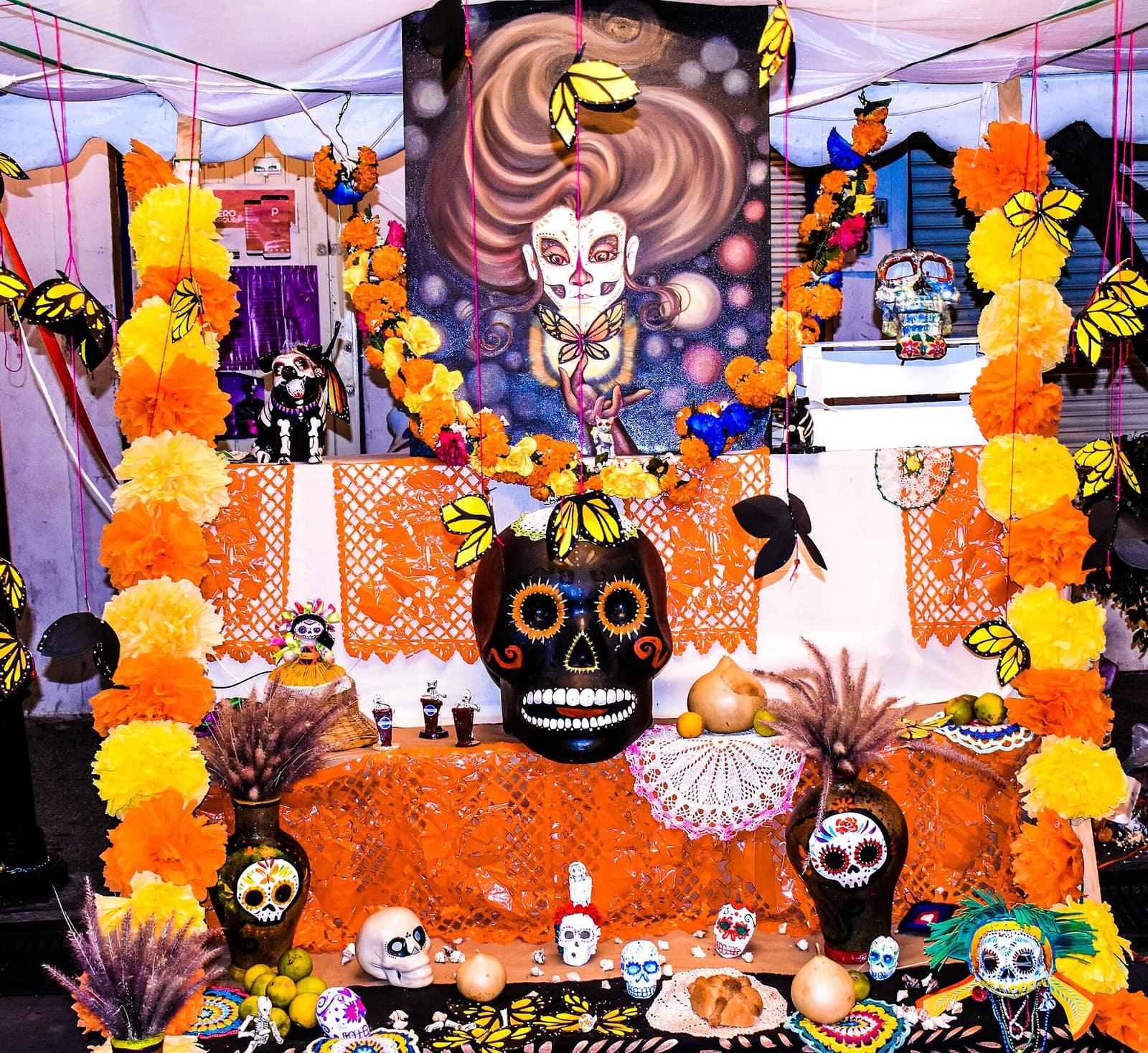
If your Los Cabos trip falls in late October or the first few days of November, you are arriving during one of the most visually striking and culturally specific times of year in Mexico. Día de los Muertos in Los Cabos is not an event imported for tourists. It is observed here by local families in the way it has been observed across Mexico for generations: altars in homes, cemetery visits, marigolds in every market stall, and a calendar that runs from October 31 through November 2. San José del Cabo and its Plaza Mijares are the places to be if you want to see it done well. Here is what to expect and how to plan around it.
What Día de los Muertos Is
Día de los Muertos is a pre-Hispanic tradition that merged with the Catholic calendar after Spanish colonization. Indigenous Aztec and other Mesoamerican cultures held annual observances to honor the dead long before the Spanish arrived. When Catholicism took root, those traditions blended with All Saints’ Day (November 1) and All Souls’ Day (November 2), producing the three-day observance that exists today.
The core idea is that spirits of the deceased return to the living world for a brief annual visit. Families prepare to welcome them: they build ofrendas (altars) loaded with the person’s favorite food and drink, photographs, candles, and marigolds whose scent is believed to guide spirits home. They visit cemeteries, clean and decorate graves, and spend time in the presence of those who are gone. The tone is celebratory rather than mournful, which is where visitors sometimes arrive with the wrong frame of mind.
UNESCO recognized Día de los Muertos as an Intangible Cultural Heritage of Humanity in 2008. Calling it “Mexican Halloween” misses the point by a wide margin. It is a genuine act of remembrance, not a costume occasion.
The three days run like this: October 31 is the transition, when altars are assembled and preparations are finalized. November 1 (Día de los Inocentes, or Día de los Angelitos) is dedicated to the spirits of children. November 2 (the main Día de los Muertos, or All Souls’ Day) is when adults are honored, cemetery gatherings peak, and civic spaces like town squares fill with public ofrendas.
Where to Find Events in Los Cabos
San José del Cabo has the most authentic and well-organized public observance in the region. The town has a working civic center, a local population with deep roots here, and a tradition of community altars at Plaza Mijares, the main square in front of the historic mission church. In the days leading up to November 2, local families and community organizations install elaborate ofrendas around the square. They are large, detailed, and absolutely meant to be looked at.
The Art District, concentrated along the streets near the town center, participates with gallery displays and altar installations during the season. If you are in San José on a Thursday evening, the weekly Art Walk falls squarely in the middle of the Día de los Muertos period and typically features relevant artwork, altars in gallery windows, and seasonal work by local artists.
Cabo San Lucas has a more commercial feel around this time. Some hotels, beach clubs, and restaurants put up altar displays, and you will see visual evidence of the holiday throughout the marina district. But the civic heart of the observance is in San José, a 45-minute drive east along Federal Highway 1.
Todos Santos, about 1.5 hours north of San José on Mexico Federal Highway 19, has a strong arts community and a genuine local population. As a Pueblo Mágico with a long tradition of galleries and craft studios, it takes the cultural calendar seriously. The town’s public spaces and galleries typically host Día de los Muertos displays, and the scale of the celebration is more intimate than San José but often more personal. A day trip to Todos Santos on October 31 or November 1 lets you see the preparations in a smaller town before returning to San José for the main events on November 2.
One calibration worth making: Los Cabos is not Oaxaca or Mexico City, which have become internationally known for Día de los Muertos tourism with parade infrastructure and events that run for weeks. What you find here is a genuine local observance that welcomes observers at civic spaces. The difference matters. You are not watching a production. You are watching a community do something it does every year for itself.
The Ofrenda: What You Will See at the Altars
An ofrenda is a tiered altar built to welcome a deceased family member’s spirit home. The construction follows a traditional logic rooted in the four elements. Papel picado (colorful paper cut into intricate patterns) represents air; the pieces flutter when a breeze passes through. Candles represent fire and guide the way. Water is set out so spirits can refresh themselves after the journey. Food and flowers represent earth.
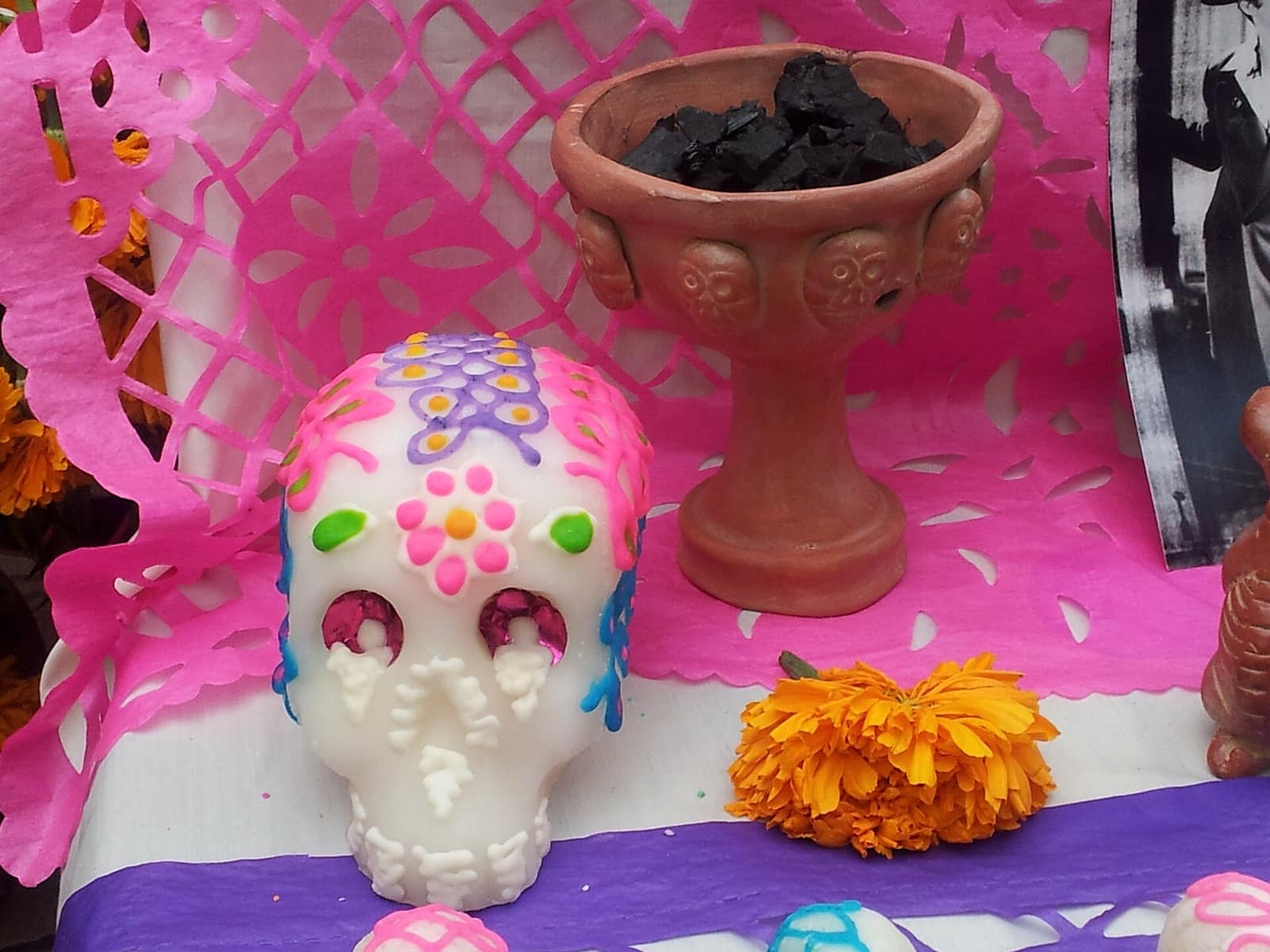
Photographs of the deceased anchor the altar, usually placed at the top or center. Around them: fresh marigolds, the person’s favorite foods and drinks, copal incense burning in a clay brazier, and objects that mattered to them in life. A musician’s altar might include an instrument. A cook’s might include a particular dish. The point is specificity; the altar is for a particular person, not a generic gesture toward the dead.
Sugar skulls (calaveras de azúcar) are the decorative icons most associated with the holiday. In their traditional form, they are pressed from sugar molds and decorated with colored icing and metallic foil, often with a name written across the forehead. They are not disrespectful. They are a form of affection and an acknowledgment that death is part of life, not a thing to be hidden.
Public ofrendas at Plaza Mijares are set up by community organizations and welcome visitors to observe. You can look closely, read the photographs and names, and photograph the altars. The public ofrenda is a community act and community witnessing is part of its purpose.
Food and Flowers: What the Tradition Tastes Like
Cempasúchil, the Mexican marigold (Tagetes erecta), is the defining flower of the holiday. The bright orange blooms appear in enormous quantities: arranged on altars, scattered as petal paths from cemetery gates to gravesites, and piled at market stalls in the weeks before November 2. Their scent is meant to guide spirits from the land of the dead back to the family altar. The smell hits you before you see the flowers.
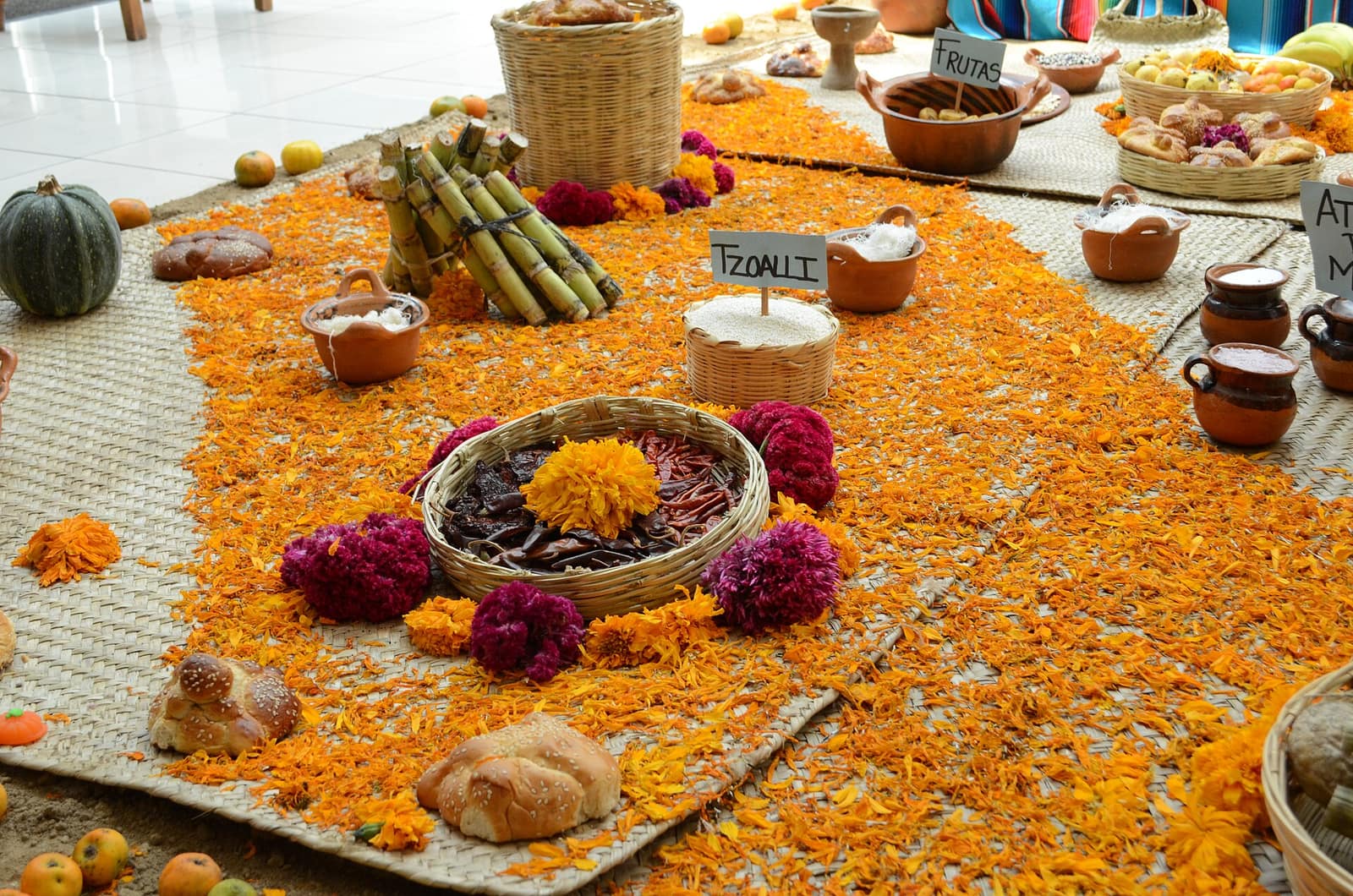
Pan de muerto (bread of the dead) is the traditional sweet bread of the season. It is a soft, anise-flavored enriched bread dusted with sugar and shaped into a round loaf with bone-shaped strips across the top and a small round at the center representing a skull. Bakeries and some grocery stores in San José del Cabo and Cabo San Lucas carry it in the weeks before November 2. Buy it fresh; it is best warm and the texture declines quickly.
Other offerings placed on ofrendas include tamales, mole negro, and atole, a warm corn-based drink that appears at celebrations across Mexico. Some ofrendas include mezcal or a favorite beer. The point, again, is that the offering is chosen for a specific person. If the person loved a particular brand of soda, that bottle goes on the altar.
How to Visit Respectfully
The public altars at Plaza Mijares and in the Art District are meant to be seen. Locals who build them are sharing something meaningful. Observing carefully, reading the names and photographs, and keeping quiet while you do so is the appropriate response.
Cemetery visits are different. Families gather at gravesites on the evenings of November 1 and 2, and in Los Cabos this is a private family gathering rather than a public event. If you visit a cemetery during these nights, keep a low profile. Ask before photographing families at gravesites. Arriving in the afternoon, when families are still decorating rather than gathered for the vigil, is less intrusive.
Calavera face painting (the sugar skull makeup style) is worn by participants in parades and organized events in Mexico City. In a smaller civic context like San José del Cabo, read the room before showing up with painted skulls on your face. At a community cemetery vigil, it does not fit. At a hotel or restaurant event organized for mixed attendance, it might.
The holiday is a family observance that unfolds in public spaces. Treat it accordingly and you will not go wrong.
Which Days Are Worth Staying For
If you have any flexibility, plan to be in San José del Cabo from the evening of October 31 through November 2. That window covers the altar setups and final preparations, the evening of November 1 when ofrendas for angelitos are freshly installed and candlelit, and the full day of November 2 when cemetery gatherings peak and Plaza Mijares is at its most active.
November 2 is the main day. Cemetery activity typically runs through mid-afternoon and the public spaces in San José are most active in the morning and early afternoon. By evening on November 2, the observance winds down.
Getting There and Where to Stay
November is one of the best months to visit Los Cabos on practical grounds. The hurricane season that runs through October typically winds down by early November, and the dry season’s clear, low-humidity days arrive right around then. Daytime highs in San José del Cabo in early November run in the mid-to-upper 70s Fahrenheit; evenings are comfortable in a light layer. The best time to visit Cabo guide has the full seasonal breakdown, and the weather by month page has specifics for November and beyond.
Flights land at Los Cabos International Airport (SJD), located in San José del Cabo, about 10 minutes from the town center. If you are basing yourself in Cabo San Lucas, the drive to San José for the main events is about 45 minutes on Federal Highway 1.
For this particular trip, staying in San José del Cabo or the Corridor puts you close to where the observance is centered. Cabo San Lucas is fine as a base but adds transit time on the days that matter. November is high season and room availability tightens by late September, so book early if Día de los Muertos is the anchor for your trip.