Why make the trip
La Paz offers something most of the Los Cabos corridor does not: a city that functions for the people who live there, not just for visitors. The malecón runs for several kilometers along the waterfront and is a genuine neighborhood gathering spot in the evenings, lined with palms, fish taco stands, and open-air restaurants. The waterfront sunsets here face west over the bay, and because the city sits on a protected inlet of the Sea of Cortez rather than the open Pacific, the water is calm and the light turns warm well before dusk.
The two headline draws are Balandra Beach and the chance to swim with whale sharks or snorkel with sea lions at Los Islotes, near Espíritu Santo island. These are world-class natural experiences that attract serious travelers on their own. But La Paz also works simply as a change of scenery: a couple of hours browsing the art galleries and taco shops around the central plaza, a long lunch on the malecón, and a drive back to Cabo before dark. You do not need to structure the whole day around a boat tour to make the trip worthwhile.
La Paz is also less crowded than the Cabo San Lucas corridor. Balandra has a daily visitor cap and limited parking, but the whale shark encounter area in the bay is managed with strict group sizes per operator. The sea lion colony at Los Islotes is open most of the year, with seasonal breeding closures. The whole region around Espíritu Santo is a UNESCO Biosphere Reserve, which shapes how operators run their tours and how many people are on the water at once.
Balandra Beach
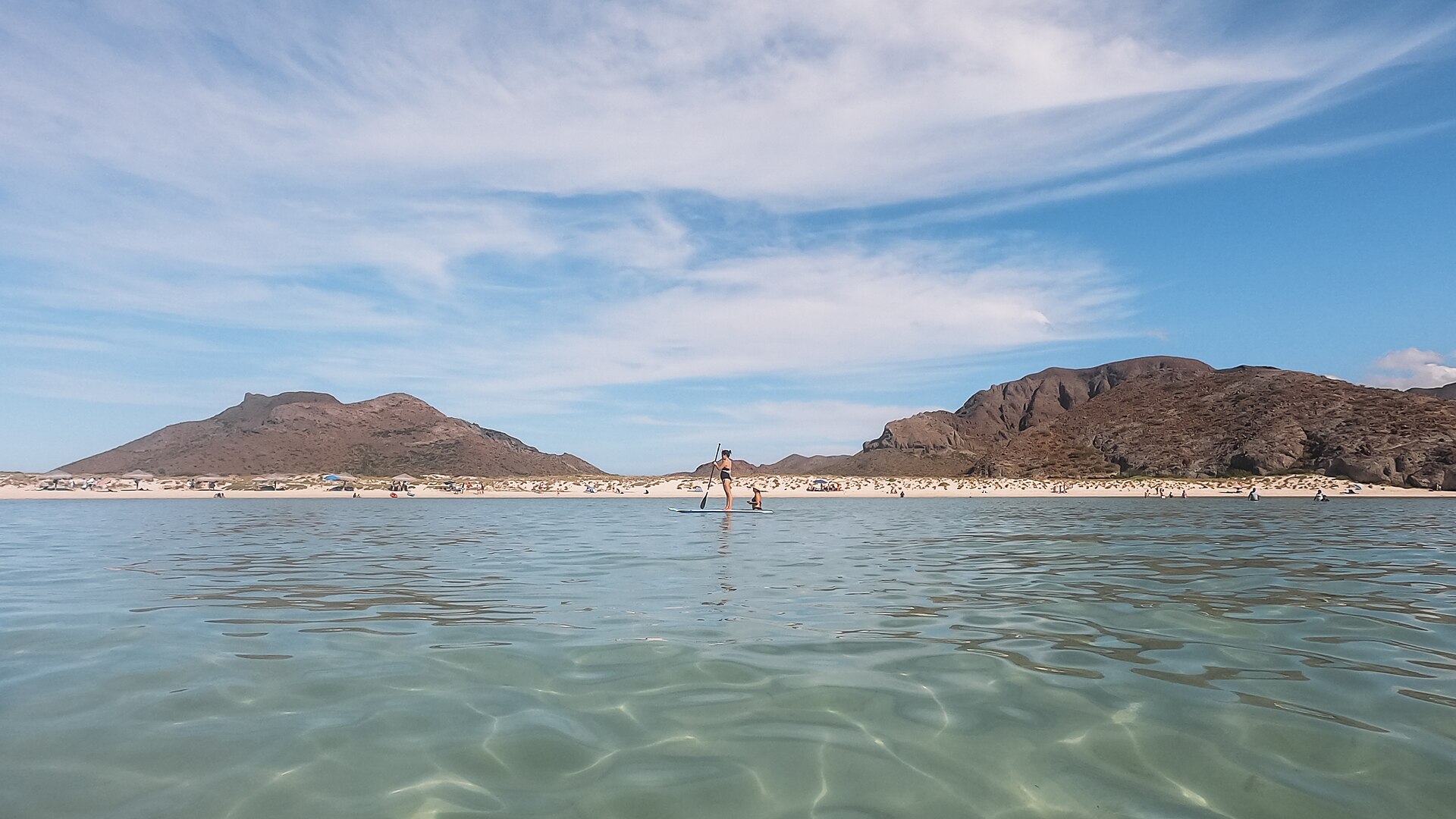
Balandra is the beach that photographs well and earns its reputation. It is a shallow, protected lagoon about 25 kilometers north of downtown La Paz, and at low tide the water is so flat and clear you can wade 50 meters from shore without reaching your waist. The bottom is white sand and the color of the water ranges from pale turquoise to deeper teal depending on the time of day and the angle of the sun. There is a large rock formation near the shore called the Hongo ("the mushroom") that appears in most of the photography of the place.
A few practical details matter here. The federal government imposed a daily visitor cap on Balandra to limit environmental impact, and the parking lot has limited capacity. In practice this means the lot fills up on holiday weekends and on busy winter-season days, sometimes before 9 a.m. If you are driving yourself, plan to arrive early. There are no large beach clubs, no jet ski rentals, and no food vendors inside the protected area, so bring what you need: water, snacks, shade, and sun protection. There is a modest entrance booth and restroom facilities at the lot. The beach itself has several small coves to explore on foot, and the calm water makes it one of the few spots in the region where swimming in the Sea of Cortez is safe and genuinely enjoyable. For a look at how Balandra compares to other great beaches across Los Cabos, see the best beaches guide. The full Balandra Beach page covers the logistics in more detail.
The drive from downtown La Paz to Balandra takes about 25 to 30 minutes on a paved road. If you are on an organized tour from Cabo, Balandra is often included as a stop before or after the boat excursion to Espíritu Santo. If you are driving yourself, it is a straightforward route and the road is well-signed from the highway.
Whale sharks and sea lions
Swimming with whale sharks in the waters near La Paz is a seasonal experience that runs roughly from October through April, though exact dates shift year to year based on water temperature. Whale sharks are filter feeders and pose no threat to swimmers, but the encounter is regulated closely. Licensed operators run small groups out to where the sharks are feeding near the surface, everyone stays at a respectful distance, and you are not permitted to touch them. The encounter typically lasts one to two hours on the water, and the sharks can range from 15 to 40 feet in length. Book ahead: reputable tours fill quickly during peak season and only operators with current SEMARNAT permits can legally run the activity.
Whale shark season overlaps cleanly with the cool, dry months that are the most comfortable time to visit Los Cabos in general. If whale watching in the Cabo corridor is on your list, adding a La Paz whale shark trip during a longer trip turns a single wildlife experience into two very different ones: gray and humpback whales in the Pacific, whale sharks in the Sea of Cortez.
The sea lion colony at Los Islotes sits at the northern tip of Espíritu Santo island, about 45 minutes by panga from La Paz's waterfront. The colony has several hundred California sea lions and is active most of the year, though seasonal breeding closures (typically summer) may restrict snorkeling access. Confirm current access with your operator before booking. When the colony is open, you snorkel in the water while sea lions swim very close by. They are curious and fast, and the experience is completely different from watching marine animals from a boat. Most full-day tours from La Paz combine Espíritu Santo, Los Islotes, and a beach break on one of the island's coves. Tours from Cabo that include the sea lion snorkel typically run 10 to 12 hours total. See the whale shark and sea lion swims page for more details.
Day trip or overnight?
The honest answer is that La Paz works better as an overnight than as a day trip from Cabo San Lucas, even though plenty of people do it in a day. The round-trip drive is roughly 5 hours at minimum, and if you add a full boat excursion to Espíritu Santo, you are looking at a 12-hour day with an early start. That is manageable but tiring, especially in summer when daytime temperatures in La Paz can hit the upper 90s Fahrenheit.
A night in La Paz changes the math considerably. You can arrive in the afternoon, walk the malecón in the evening when the city comes alive, wake up early for Balandra or a whale shark tour without a 5 a.m. departure from Cabo, and return the following afternoon. La Paz has a range of accommodation from budget guesthouses to boutique hotels near the waterfront, with rooms typically running $80 to $200 per night for a mid-range property. The where to stay by area guide covers how to choose a base across the Los Cabos region, though La Paz accommodation is not part of the main resort zone.
If you are weighing La Paz against other day trips from Cabo, the comparison is roughly: Todos Santos (about one hour north on the Pacific side) for a shorter, easier excursion focused on art and lunch; La Paz for serious wildlife and a beach you will remember. They are in opposite directions and easy to separate on a longer itinerary.
Getting there
Most visitors get to La Paz one of two ways: a rental car or an organized tour departing from Cabo San Lucas or San José del Cabo. There is no reliable shuttle or public bus option that works on a convenient day-trip schedule from the tourist corridor.
A rental car gives you the most flexibility, particularly for Balandra, which sits outside town and is hard to reach without wheels. Highway 1 north from Cabo San Lucas is a two-lane paved federal highway through open desert and occasional small towns. The road is in reasonable condition, and the drive passes through Todos Santos (about an hour from Cabo) before continuing north to La Paz. Driving at night is not recommended on this highway due to livestock on the road and limited lighting. Plan to be back in Cabo before dark if you are doing a day trip. Budget around USD $40 to $60 per day for a compact rental, plus fuel. The drive is scenic and straightforward in daylight.
Organized tours from Cabo typically include hotel pickup, transportation, a licensed guide, equipment, and a light lunch or snacks for about USD $150 to $250 per person depending on what is included (whale shark tour, sea lion snorkel, Espíritu Santo full day). These tours handle all logistics and are the right call if you do not want to drive or if you want the wildlife experience to be the core of the day. Check that any whale shark operator you book through holds a current SEMARNAT permit and limits group size on the water.
Best time to visit
La Paz shares the same broad climate as Los Cabos: warm and dry from November through April, hot and humid from May through October, with hurricane season running July through October. The most comfortable visiting months for a day trip are November through March, when daytime highs are in the 75 to 85°F range and humidity is low. This window also lines up with whale shark season, making it the peak period for the signature wildlife experience.
April and early May work well for Balandra and the sea lion colony. Whale sharks may still be present into April depending on the year, and temperatures are warm but not yet harsh. June through September is off-season for whale sharks, though the sea lion colony at Los Islotes remains accessible outside its breeding closure. Summer heat (often 95 to 100°F by midday) and hurricane risk make it the hardest period to visit, though hotel rates drop. The best time to visit Los Cabos overview applies here as well.
For the whale shark swim specifically, the season can shift by several weeks in either direction. Operators follow the sharks and post current availability on their booking pages. If the whale shark experience is the reason you are making the trip, target October through March and confirm with your operator that the season is active before you commit to the drive.
Frequently asked questions
How far is La Paz from Cabo San Lucas?
La Paz is roughly 135 miles (about 220 km) north of Cabo San Lucas by road, following Highway 1. The drive takes approximately two to two and a half hours in normal traffic conditions. The route passes through Todos Santos about halfway. If you are flying into Los Cabos International Airport (SJD) in San José del Cabo, La Paz is about two hours from the airport.
Is whale shark swimming available year-round in La Paz?
No. Whale shark season near La Paz typically runs from roughly October through April, when the sharks gather to feed in the warmer, shallower waters of the bay. Exact dates shift each year based on water temperature and conditions. The season can start as early as late September or extend into May, but it is not reliably available June through September. Confirm current availability directly with a licensed operator before booking your trip.
Can you visit Balandra Beach and see whale sharks on the same day trip from Cabo?
It is possible but ambitious. A whale shark tour typically takes four to five hours including transport on the water, and Balandra adds another hour round-trip from downtown La Paz. Combined with the two-plus-hour drive each way from Cabo, you are looking at a 12-plus-hour day. Many organized tours package both into a single day from Cabo, but if you have the option, splitting them across a day trip plus an overnight makes the experience more comfortable and gives you more time at each place.
Do I need a rental car to visit La Paz from Cabo?
A rental car gives you the most flexibility, especially for Balandra Beach, which is about 25 kilometers outside La Paz and has no reliable public transit connection. That said, organized tours from Cabo pick you up at your hotel and handle all transportation, which is a good option if you prefer not to drive Highway 1. There is no convenient direct shuttle or bus service between the Cabo tourist corridor and La Paz that works for a day trip.
Is Espíritu Santo island accessible on a day trip from Cabo?
Yes, with an early start. Most organized Espíritu Santo tours depart La Paz's waterfront between 7 and 8 a.m. and return by mid-afternoon. If you are adding the drive from Cabo, you would need to leave Cabo by 5 or 5:30 a.m. to make those departures. Many travelers who want a serious Espíritu Santo experience prefer spending the night in La Paz to avoid the very early start. The island is a UNESCO Biosphere Reserve and the boat ride takes around 45 minutes to an hour each way from La Paz.