Is it swimmable?
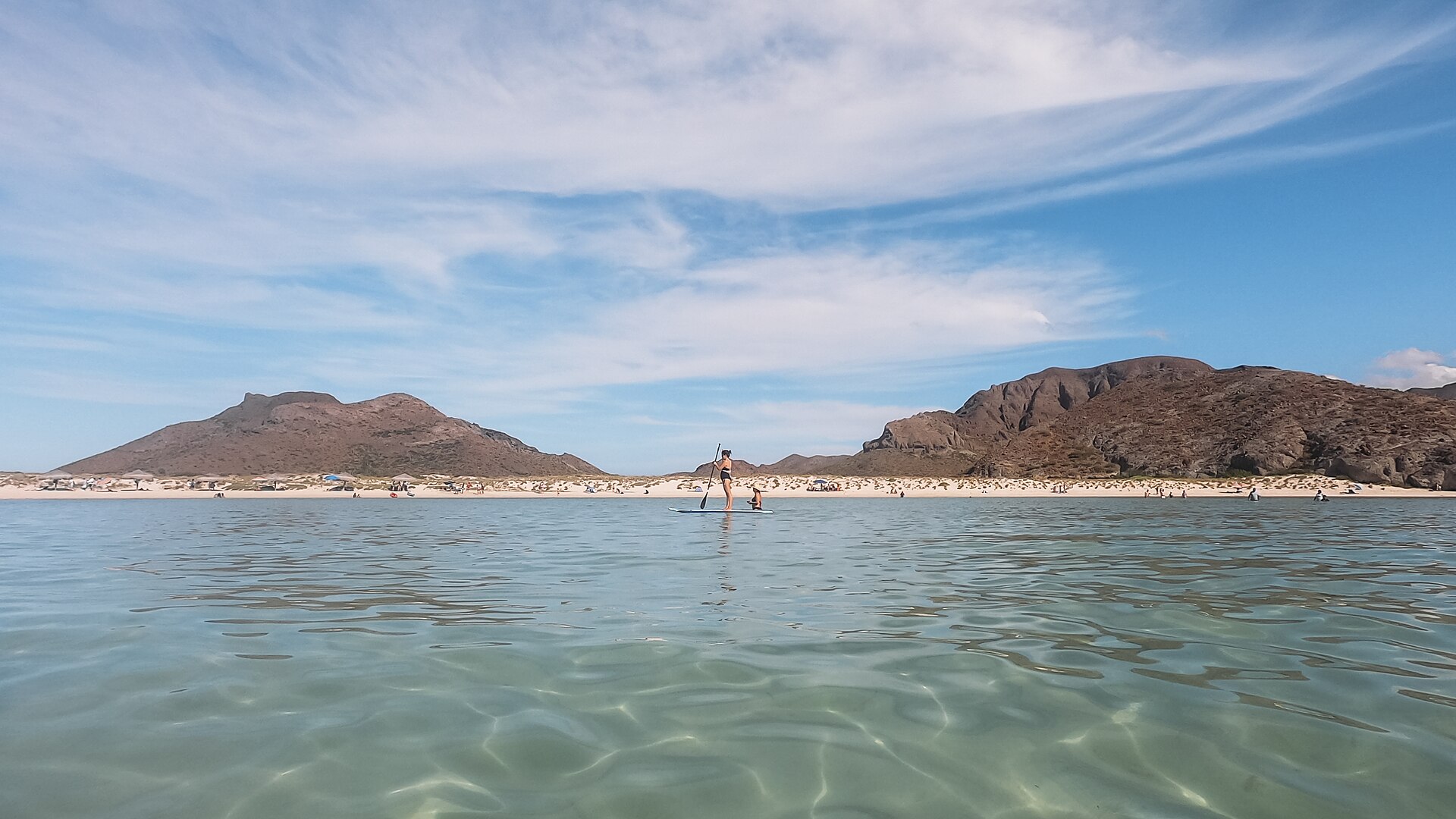
Yes. Balandra is one of the safest natural swimming beaches in the region. The bay is protected from Pacific swell and Sea of Cortez chop by a narrow mouth, which keeps the interior water nearly flat. At low tide, the lagoon is so shallow you can walk out 50 to 75 feet and still be knee-deep. The sandy floor is gradual and free of significant drop-offs, which makes it unusually safe for kids and casual swimmers. Water temperature in summer (July through October) reaches the low 80s Fahrenheit, comparable to a warm bath. In the cooler months, November through April, it drops into the mid-60s to low 70s, which is refreshing rather than cold if you're moving.
One thing to watch: the mouth of the bay and the area around the mangroves has mild current at certain tide stages. Stay in the wide central lagoon area and you won't have issues. The park staff posts signs and the water is generally clear enough to see what's below you.
What to expect
Balandra sits inside a federal protected natural area managed by CONANP (Mexico's Commission of Natural Protected Areas). The government limits daily visitors to around 650 people at a time to protect the dunes, mangroves, and water quality. That cap matters. In high season, December through March, the lots fill up by 9 or 10 a.m. on weekends and Mexican holidays. If you arrive at noon on a Saturday in February expecting to waltz in, you may be turned away.
The beach itself is a long crescent of fine white sand with the lagoon in front and low desert hills behind. The iconic landmark here is the Hongo (mushroom), a large eroded rock formation that balances improbably above the shoreline. It's one of the most photographed natural features in Baja Sur. You can walk to it in about 10 minutes along the beach. There are also several smaller coves accessible by short trails, and a mangrove channel at the south end worth exploring if you bring a kayak or paddleboard.
Services are minimal by design. The entrance area has portable restrooms, a few basic food stalls selling cold drinks and snacks (budget around $3 to $8 USD for a drink and simple food), and a small parking area. There are no beach chairs for rent, no palapas for hire, and no water sports concessions on site. Bring your own shade, your own snacks, and anything else you need for a full day. Trash bins are available but fill quickly on busy days, so packing out your waste is a good habit here.
Getting there and parking
From Cabo San Lucas, take Mexico Highway 1 north toward La Paz. The drive is approximately 115 miles and takes about two hours in normal traffic conditions. From San José del Cabo, allow about two and a quarter hours. The turn-off for Balandra is roughly 14 miles north of central La Paz on the road toward Pichilingue. Look for signs pointing toward Playa Balandra, not the ferry terminal.
Parking is free but limited. There's a small gravel lot at the main entrance and some overflow parking nearby. On peak days (weekends, Semana Santa, Christmas week), all spots can fill by mid-morning. Your best move is to arrive before 8:30 a.m. to secure both parking and entry. Alternatively, visit on a weekday when crowds are noticeably lighter.
If you'd rather not drive the full round trip yourself, several La Paz-based tour operators run guided day trips that include Balandra and sometimes Tecolote Beach in a single outing. Check with operators in La Paz directly; pricing for small-group day trips typically runs $60 to $120 USD per person depending on group size and inclusions. Note that ride-share apps like Uber are available in La Paz itself but coverage is inconsistent on the road to Balandra, so a rental car or guided tour is the most reliable option.
Best time to go
November through April is the most comfortable window. Daytime temperatures hover between 72 and 85 degrees Fahrenheit, the sky is reliably clear, and the water is clean. Crowds peak in December, January, and especially around Mexican national holidays. If you're visiting during those periods, weekdays are significantly less congested than weekends.
May and June are hot and dry, with daytime temps climbing into the mid-90s Fahrenheit, but the lagoon itself stays pleasant and crowds thin considerably. July through October brings humidity and the possibility of tropical weather in the broader region, though the bay itself is well-protected. Water temperature is warmest then (low 80s F), and you'll often have the place nearly to yourself on a weekday.
The light at Balandra is best for photography in the morning, when the sun is behind you and illuminates the turquoise of the bay. By early afternoon the sun is overhead and some of the color saturation flattens out. This is another reason to arrive early, independent of the crowd situation.
Good to know
Entry to Balandra is free, but the visitor cap is enforced. There's no online reservation system as of the time of publication. It's strictly first-come, first-in at the gate. If you're turned away, Tecolote Beach (Playa Tecolote) is about 4 miles further along the same road, is larger, and has more food and drink vendors. It lacks Balandra's dramatic shallow lagoon but the water is clean and calm, and you won't face the same entry limits.
Sunscreen matters here more than you'd expect. The white sand and shallow water reflect UV from below as well as above. Reef-safe sunscreen is required inside the protected area, and attendants may check. Bring mineral-based (non-aerosol) sunscreen and apply before you enter the water.
The mangrove channel at the southern edge of the bay is a productive birding spot. Great blue herons, pelicans, and several shorebird species are common. If wildlife observation is part of your interest, bring binoculars.
Balandra is included in virtually every rundown of the best beaches in Baja Sur, and it earns the recognition. But it's a natural reserve, not a resort amenity, so come prepared for a self-sufficient day. For the full context on the La Paz day trip including whale shark swims, the malecón, and logistics for making the drive worth your while, see the La Paz day trip guide. If you're building out your larger Cabo itinerary, the Los Cabos Travel Guide has everything from resort picks to activity booking.
Frequently asked questions
Is there an entrance fee for Balandra Beach?
No, entry to Balandra is free as of current information. The site is a federal natural protected area managed by CONANP. There is a daily visitor cap of around 650 people, and on peak days it fills early, but the entry itself costs nothing. Parking is also free.
Can I bring a kayak or paddleboard to Balandra?
Yes. Personal non-motorized watercraft are allowed, and the mangrove channel at the south end of the bay is a good place to explore by kayak or SUP. There are no rentals on site, so you need to bring your own or rent in La Paz and transport them. There are no motorized boats permitted inside the bay.
How long is the drive from Cabo San Lucas to Balandra?
Roughly two hours in normal traffic, covering about 115 miles on Highway 1 north to La Paz and then 14 miles beyond the city toward Pichilingue. From San José del Cabo, add about 15 minutes. The highway is paved and well-maintained the entire route. Budget the full day if you're doing a round trip from Los Cabos.
What should I bring since there are no beach services?
Pack water, food, snacks, shade (umbrella or pop-up), reef-safe mineral sunscreen, and any equipment you want for the water. Cold drinks and basic snacks are available at the entrance food stalls at around $3 to $8 USD, but selection is limited. There are portable restrooms. Everything else is up to you.
Is Balandra Beach good for families with young children?
It's one of the best beaches in Baja Sur for young kids, specifically because of the shallow, calm lagoon. Even non-swimmers can wade comfortably in the central bay area. The gradual sandy bottom and flat water make it far safer than open ocean beaches. Just arrive early to secure parking and entry before the daily cap is reached.