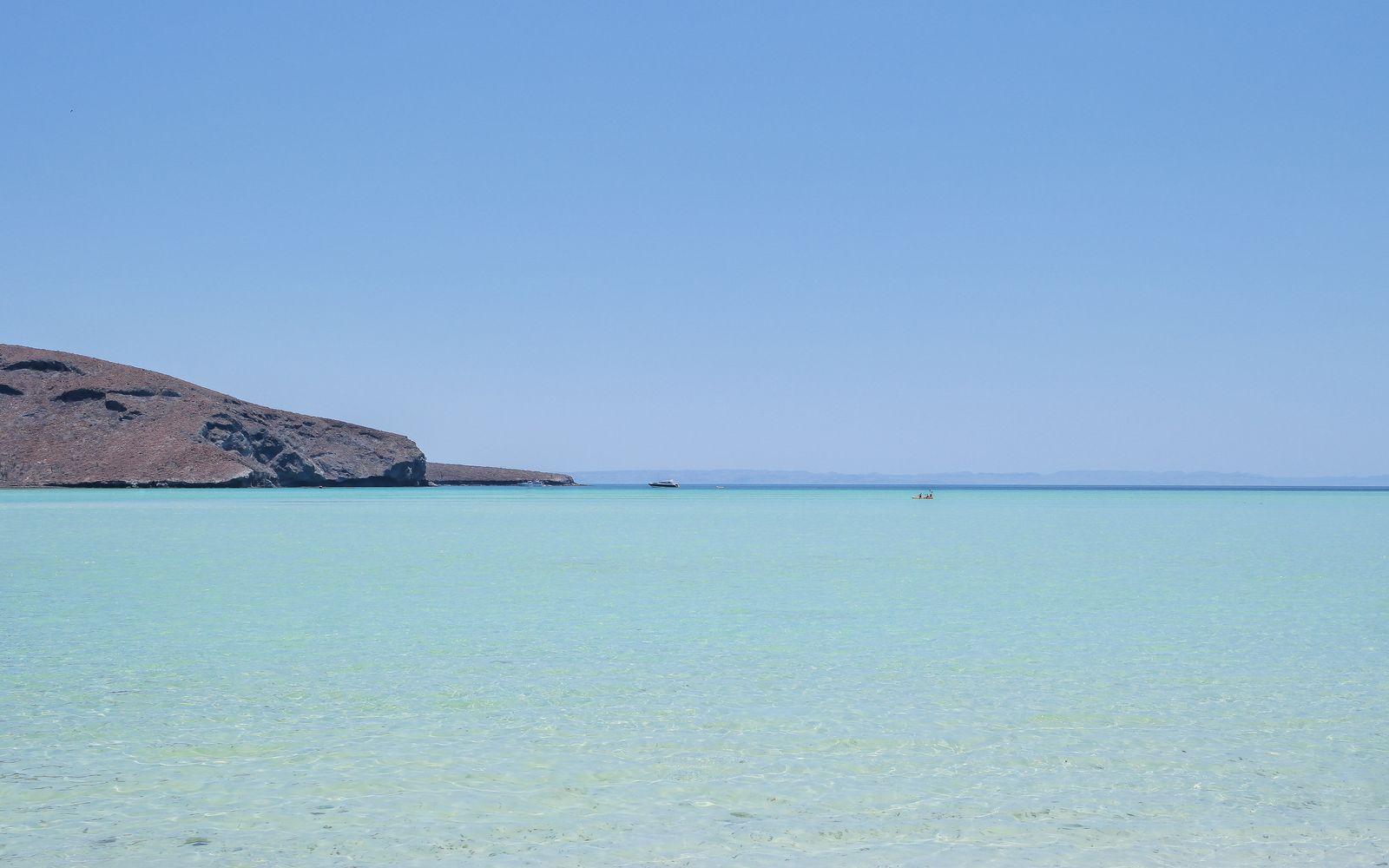
La Paz sits about 2 to 2.5 hours north of Cabo San Lucas on Highway 1, and it rewards the drive in a way that most day trips don’t. Where Los Cabos runs on resort amenities and curated experiences, La Paz is a working Baja capital with a Sunday-afternoon pace, a long waterfront boulevard called the malecón, and access to the kind of marine wildlife encounters that people fly across the world for.
This is a long day. Budget 5 to 6 hours on the ground minimum, plus the driving. If you want to do it justice, consider staying one night and turning it into an overnight. But it works as a hard day trip if you leave Cabo by 7 a.m.
See La Paz (Day Trip) for a full zone overview and our Los Cabos Travel Guide for the bigger picture on planning your trip.
The Drive: Highway 1 North Through Baja Desert
The route is straightforward: Highway 1 north out of Cabo San Lucas, through San José del Cabo, then up through the desert toward La Paz. You’ll pass through Ciudad Constitución and Todos Santos territory before the road drops toward the Sea of Cortez side and the capital appears.
A few things worth knowing before you go:
- Gas up in Cabo. Don’t rely on finding a station at an ideal moment along the route. Fill the tank before you leave.
- The road is well-maintained but winding. There are stretches of two-lane highway with slow trucks. GPS navigation works fine; allow the full 2.5 hours.
- Rental car required. There is no direct bus from Cabo San Lucas to La Paz that works as a day trip. A private shuttle is an option (prices typically run $100–$180 each way depending on the operator and group size), but a rental car gives you the flexibility to stop at Balandra and Espiritu Santo without coordinating around a driver’s schedule.
- Toll: There is a highway toll section; keep a few hundred pesos accessible.
The drive itself is scenic in a dry desert way. The Sierra de la Laguna foothills run along one side, the landscape alternates between cardon cactus stands and flat scrub, and the light turns extraordinary in the early morning. It doesn’t feel like going to a resort town. It feels like Baja.
The Malecón: La Paz’s Waterfront Boulevard
The malecón is the long pedestrian-friendly boulevard that runs along La Paz Bay. This is the center of daily life in the city: coffee shops, taco stands, art installations, shade trees, and a calm stretch of bay water that lets you wade in without worrying about currents.

Walk the malecón when you arrive to get your bearings. The bay here faces west, which means the afternoon light on the water is genuinely beautiful and the sunsets can be spectacular. Locals jog, bike, and walk dogs here in the evening. Tourists aren’t the main event.
The downtown blocks just off the malecón hold a mix of traditional Mexican restaurants and spots catering to the resident expat community. La Paz has a significant population of US and Canadian long-term visitors, so English menus are common and the food quality at the better places is high.
Balandra Beach: The Shallow Turquoise Lagoon
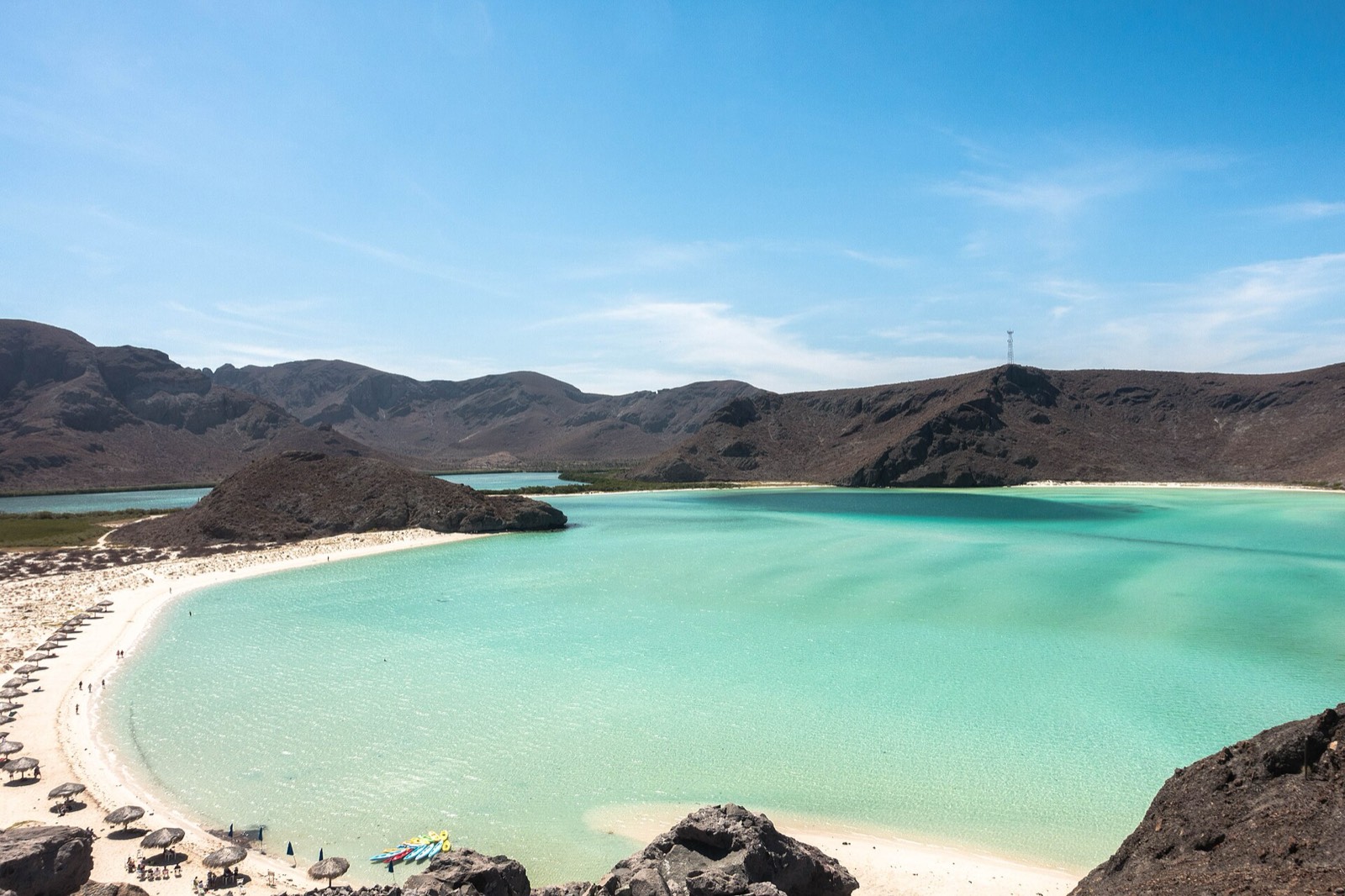
Balandra is the reason most travelers make this drive. It’s a protected bay about 20 minutes north of downtown La Paz, and the water is shallow enough in several spots that you can walk 50 feet out and still not be knee-deep. The color is the Sea of Cortez at its most surreal: multiple shades of teal and blue depending on depth, completely calm, and warm.
A few practical details that matter:
- There is a daily visitor cap. The Mexican government limits access to Balandra to protect the ecosystem. As of recent years, the cap runs around 500 visitors per day, and it’s enforced. On holiday weekends and during peak season (November through April), the lot fills by mid-morning. Arrive before 9 a.m. or book through a licensed tour operator who has pre-reserved entry.
- No outside food or single-use plastics. The reserve rules are enforced.
- There are facilities. Bathrooms, basic snack vendors, and kayak/paddleboard rentals are available on site.
- The mushroom rock is real. There’s a natural rock formation in the shape of a mushroom that appears in every photo of Balandra. You can walk to it at low tide.
Balandra is genuinely one of the most beautiful beaches in Mexico. That’s not an exaggeration. The combination of shallow water, calm conditions, protected bay, and the surrounding desert hills makes it feel like a place that shouldn’t exist.
Whale Shark Swims: What to Know Before You Book
La Paz is one of the best places in the world to swim with whale sharks, and the season is well-defined. Whale sharks typically appear in the waters around La Paz from October through April, with November through February being the most reliable window. Outside of that window, encounters become uncommon.
A few specifics:
- Tours depart from La Paz marina. Operators take small groups out in pangas (open motorboats) to where the sharks are feeding near the surface. Swims typically last 1 to 2 hours on the water once you’re out there.
- Regulated interaction. No touching, maintain distance, no flash photography underwater. These rules are enforced by licensed operators and SEMARNAT (the Mexican environmental agency).
- Prices generally run $80–$130 USD per person depending on group size, season, and whether snorkel gear is included. Confirm in advance what’s provided.
- Book before you arrive. Reputable operators with the right permits book out during peak season. Showing up at the marina and finding a boat the morning of is possible but unreliable.
- Visibility conditions vary. The whale sharks feed on plankton blooms, which means the water is often murky green rather than clear blue. You’ll see the shark clearly; you may not get magazine-quality underwater photos.
For timing your trip around whale shark season specifically, see best time to visit.
Espiritu Santo Island and Sea Lions at Los Islotes
Espiritu Santo is a UNESCO Biosphere Reserve island about an hour by boat from La Paz marina. Full-day tours typically combine snorkeling around the island’s rock formations and coves with a stop at Los Islotes, a small rocky islet at the northern tip where a colony of California sea lions lives year-round.
The sea lion swim is the highlight for most visitors. The juveniles are curious and interactive, and it’s common for them to swim directly at your mask and veer off at the last second. Adults tend to stay on the rocks. The water clarity here is better than during whale shark swims because you’re not in a plankton feeding zone.
Full-day Espiritu Santo tours typically run $90–$160 USD per person and include snorkeling gear, lunch on the beach, and a panga ride out and back. Half-day options that focus just on Los Islotes are also available at lower cost.
One logistical note: the whale shark swim and Espiritu Santo are both half to full-day commitments from La Paz. You can’t do both on a single day trip from Cabo unless one is very abbreviated. If you’re driving up for one day, pick one. If you stay overnight, you can do both.
Where to Eat in La Paz
La Paz has a stronger local restaurant culture than you might expect. A few things worth knowing:
- Tacos de marlin. Smoked marlin tacos are the La Paz street food that locals and repeat visitors point to. You’ll find them at informal stands and casual restaurants near the malecón and in the neighborhoods off downtown.
- The malecón restaurants are decent but tourist-facing. Better food is typically one or two blocks inland in the neighborhoods just off the waterfront.
- Seafood is the obvious choice. La Paz has direct access to Sea of Cortez catch, and the callo de hacha (chocolate clam) and almeja gratinada (baked scallops) that appear on menus are genuinely local.
- Budget planning: A sit-down lunch at a mid-range local restaurant typically runs $12–$25 USD per person without alcohol. Street tacos are $1–$3 each. For more context on food and overall trip costs, see how much does a cabo trip cost and the cabo resort fees and tipping guide.
Day Trip vs. Overnight: The Honest Case for Both
Do it as a day trip if: You have one free day and strong opinions about returning to your resort. You can make it work if you leave Cabo by 6:30 or 7 a.m., focus on either Balandra or a whale shark tour (not both), have lunch downtown, walk the malecón, and drive back by 4 p.m. You’ll be back in Cabo by 6:30–7 p.m., tired but satisfied.
Stay overnight if: You want to do a whale shark swim AND Espiritu Santo/Los Islotes. You want to experience the malecón at sunset and evening. You want to slow down instead of racing a clock. La Paz has good hotel inventory at most price points, and room rates are meaningfully lower than Los Cabos. A mid-range hotel in the downtown area typically runs $80–$150 USD per night.
The overnight version is the better version. But the day trip is worth doing even if you only get one of the main experiences.
Practical Summary
- Distance: Approximately 135 miles from Cabo San Lucas to La Paz via Highway 1
- Drive time: 2 to 2.5 hours each way
- Best season for whale sharks: October through April; peak November through February
- Balandra visitor cap: Enforced daily; arrive early or book through a tour operator
- Espiritu Santo tours: Year-round; sea lions at Los Islotes present all year
- Recommended start time for a day trip: 6:30–7 a.m. departure from Cabo
- Getting there: Rental car or private shuttle; no practical direct bus option
La Paz doesn’t feel like a side trip. It feels like a different country than the resort zone you came from, which is exactly why it’s worth the drive.