
Spring break in Cabo is real, and it delivers. Every March, tens of thousands of college students and twentysomethings fly into Los Cabos International Airport (SJD) and pour onto Médano Beach. But this post is for both crowds: the people flying in specifically for that energy, and the travelers who want to visit Los Cabos in March and would rather not be caught in the middle of it. Both scenarios are completely workable if you know what you’re walking into.
When Spring Break Actually Happens
Spring break in Cabo is not a single week. It runs from late February through the third week of March, with the heaviest concentration falling over three overlapping windows that align with Texas, California, and Midwest school calendars. The first two weeks of March are consistently the most intense. By the third week, things start to thin out. If you want to see the scene at full volume, aim for March 1 through 15. If you want to avoid it, book for late March or early April, when daytime highs still sit in the low 80s and the crowds have cleared out significantly.
March is also part of peak season for Los Cabos, which means the weather is excellent regardless of who else is there. Expect sunny days in the 78–84°F range, low humidity, and calm Sea of Cortez conditions. Check the best time to visit page for a full seasonal breakdown.
The Médano Beach Scene
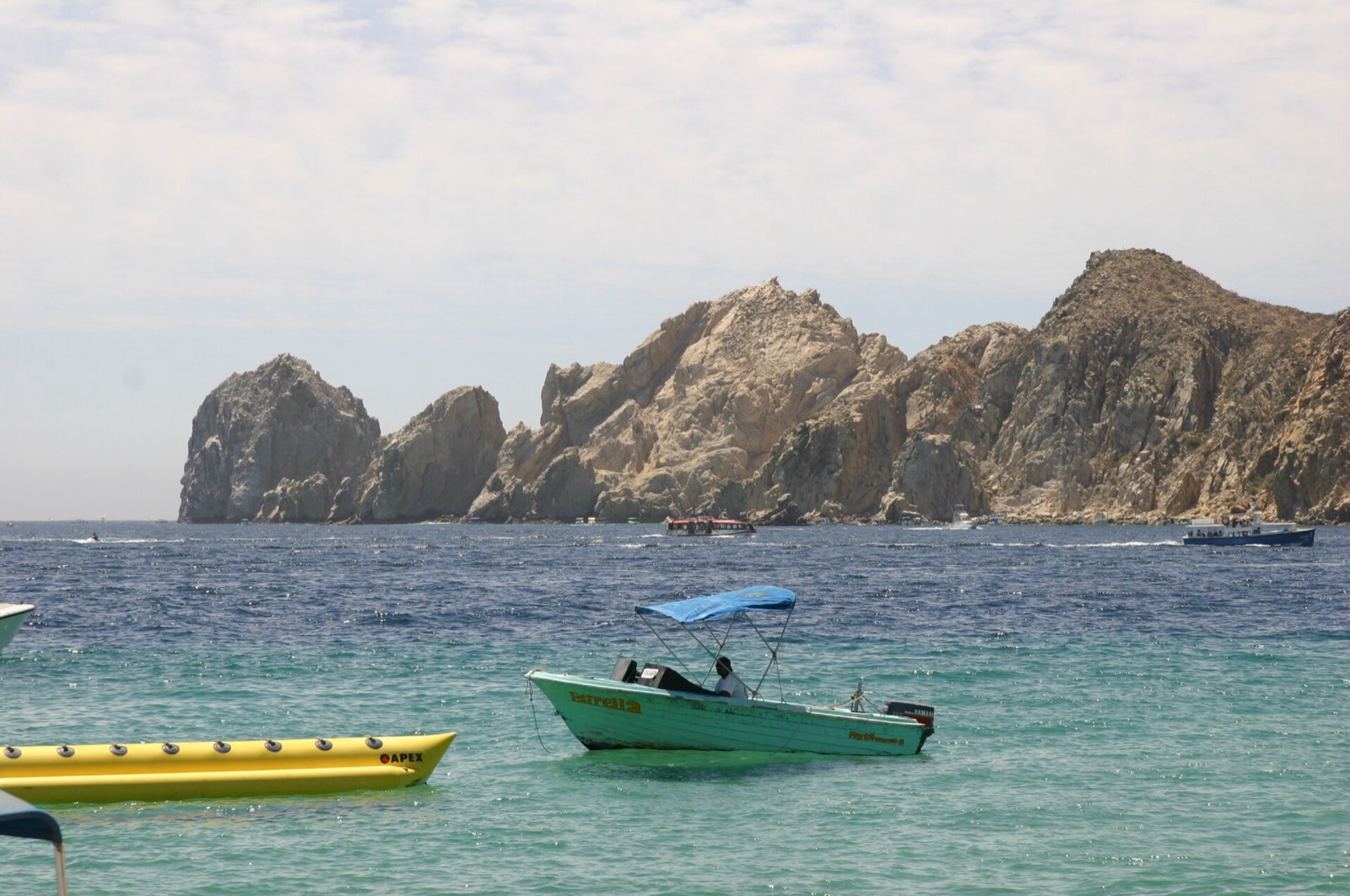
Médano Beach is the center of spring break in Cabo, full stop. It is the only truly swimmable beach in Cabo San Lucas itself, and it runs about a mile along the inner bay, packed end-to-end with beach clubs, water sports rentals, and vendors. During spring break, the beach clubs run open-bar daytime parties from around 11 a.m. through early evening, DJs included.
The clubs that anchor the spring break crowd are concentrated in the northern stretch of Médano closest to the marina. Expect cover charges in the $30–$60 USD range for daytime parties, with open-bar packages running $60–$100 per person depending on the venue and day of the week. Some clubs sell out in advance, and that is not marketing hype during the first two weeks of March. Reserve ahead if you have a specific venue in mind.
The water is calm on Médano and swimmable, which is not a given everywhere in Los Cabos. Water temps in March run in the low 70s°F. Vendors rent jet skis, banana boats, and parasailing rigs directly off the beach, typically $40–$80 per activity. There is no shortage of things to do between drinks.
Evenings on Médano transition to the marina strip and then to the Nightlife and Bars scene in Cabo San Lucas proper. The clubs along Lázaro Cárdenas run until 4 or 5 a.m. during peak spring break weekends.
Quieter Alternatives if You Want to Skip the Scene
If you are traveling to Los Cabos in March and the spring break energy is not what you signed up for, the good news is that the chaos is geographically contained. It lives almost entirely on Médano Beach and in the Cabo San Lucas nightlife corridor. The rest of the region is calm.
San José del Cabo is 30 minutes up the highway and feels like a different planet during spring break. The colonial Art District, the Thursday Gallery District Art Walk (running late October through June), and restaurants on Calle Zaragoza are full of couples and adults in their 30s and 40s, not college crowds. It is a genuinely calmer base for the same week.
The Tourist Corridor has the big resort properties strung along 20 miles of Highway 1 between the two towns. Resorts at Chileno and Santa Maria have their own controlled beach access. Chileno Beach is a protected Blue Flag cove with excellent snorkeling and no beach club parties. Santa Maria is a marine sanctuary horseshoe cove with no facilities at all, just fish and calm water. Both are a short drive from Cabo San Lucas but feel removed from it.
Todos Santos, about an hour north on the Pacific side, barely registers spring break. The Pueblo Mágico draws a slower crowd of artists, surfers, and travelers who specifically want to be away from the resort strip. Cerritos Beach, just south of town, has a laid-back surf beach club and beginner-friendly waves.

If you are traveling with family, read the cabo with kids guide for resort and activity recommendations that work during this particular week.
Booking Lead Times and Costs
March is peak demand compressed onto a narrow window. You need to book further out than almost any other time of year.
Flights: Book at least 10–12 weeks ahead. Fares out of major US hubs (LAX, DFW, ORD, JFK) typically run $350–$700 round trip depending on your departure city and whether you catch a sale. Prices spike significantly as you approach the first week of March.
Hotels and resorts: The all-inclusive properties and Médano-area hotels hit full occupancy during spring break weeks. Eight to ten weeks out is the safe lead time for a decent selection. Budget hotels in Cabo San Lucas run $80–$150/night in March; mid-range properties $200–$350; all-inclusive resorts $250–$500+ per person per night with food and drinks included. The all-inclusive math often works in your favor during a week when you will be drinking heavily at the beach.
Beach club packages: The best spots on Médano sell day-pass packages with reserved seating, which matters more than it sounds when 2,000 people are competing for beach chairs. Check the club websites directly in late January or early February for March packages.
Airport transfers: This is not the week to figure out ground transport at the airport. No reliable Uber service operates from SJD. Book a prepaid shuttle or private van transfer before you fly. Shared shuttles run $15–$25 per person each way; private transfers for groups run $80–$150 depending on destination. See is it worth renting a car in cabo if you’re planning to explore beyond the main strip.
Safety and Moderation
Spring break in Cabo has a reputation that runs ahead of reality in both directions. The experience is not dangerous if you stay in tourist areas and apply basic judgment. A few specific things worth knowing:
Stick to the tourist zone. The Médano Beach corridor, the marina area, and the main Cabo San Lucas hotel zone are well-policed and heavily touristed. Problems almost always happen when people wander into residential neighborhoods late at night, usually after too many drinks.
The water flag system is real. Green flag means safe. Yellow means caution. Red means stay out. Médano is generally green or yellow, but the Pacific-facing beaches around Land’s End, including Solmar Beach and Divorce Beach, have strong currents and are not for swimming, especially in rough conditions. Respect the flags.
Watch your drinks. This is a standard caution that applies at any high-volume party destination. Keep your drink in hand or order a new one. Use the buddy system. This is not unique to Cabo, but it is worth stating plainly.
Pace yourself with the open bar. The math on all-day open bars and Cabo sun is brutal. Drink water consistently and wear sunscreen. Heat exhaustion on day one is a fast way to ruin the rest of the trip.
Taxis vs. rideshare: Uber operates in Los Cabos but drivers frequently cancel when they see the pickup location is near a beach club at 2 a.m. Use authorized taxi stands at hotels and major venues. Agree on a fare before you get in; drivers in tourist areas are accustomed to this and will tell you upfront.
Getting Around
Cabo San Lucas is walkable within the hotel and marina zone. If you are staying on Médano Beach, you can walk to every beach club, most restaurants, and the marina without needing transport.
For anything beyond Cabo San Lucas itself, including the Corridor resorts, San José del Cabo, or day trips, you need either a rental car or organized transport. Taxis between Cabo San Lucas and San José del Cabo run $25–$35 each way. During spring break, hotel shuttle services for Corridor resorts are often the most reliable option.
Renting a car gives you access to Chileno and Santa Maria beaches in about 20 minutes, plus the full Corridor resort strip. If quieter beaches are part of your plan, a car makes the trip significantly better. The Los Cabos Travel Guide has the full regional overview with zone distances.
Who Spring Break Cabo Works For
Spring break in Cabo is a legitimate great trip if the scene is what you want. The weather is ideal, the beach is genuinely beautiful, the infrastructure is built around exactly this kind of trip, and the party-to-quality ratio is higher than most comparable destinations. Group trips of 4–8 people who book early, stay in the beach zone, and apply normal judgment tend to have exactly the week they came for.
It is also a perfectly good time to visit Los Cabos if that scene is not your thing, as long as you plant yourself in the right part of the region. San José del Cabo, the Corridor, Todos Santos, and the East Cape run at their usual pace through all of March, and the weather is at its best.
The only people who have a bad time are the ones who book too late, show up without a plan, or expect the whole region to match whatever they saw on social media. Set expectations, book ahead, and you will be fine either way.