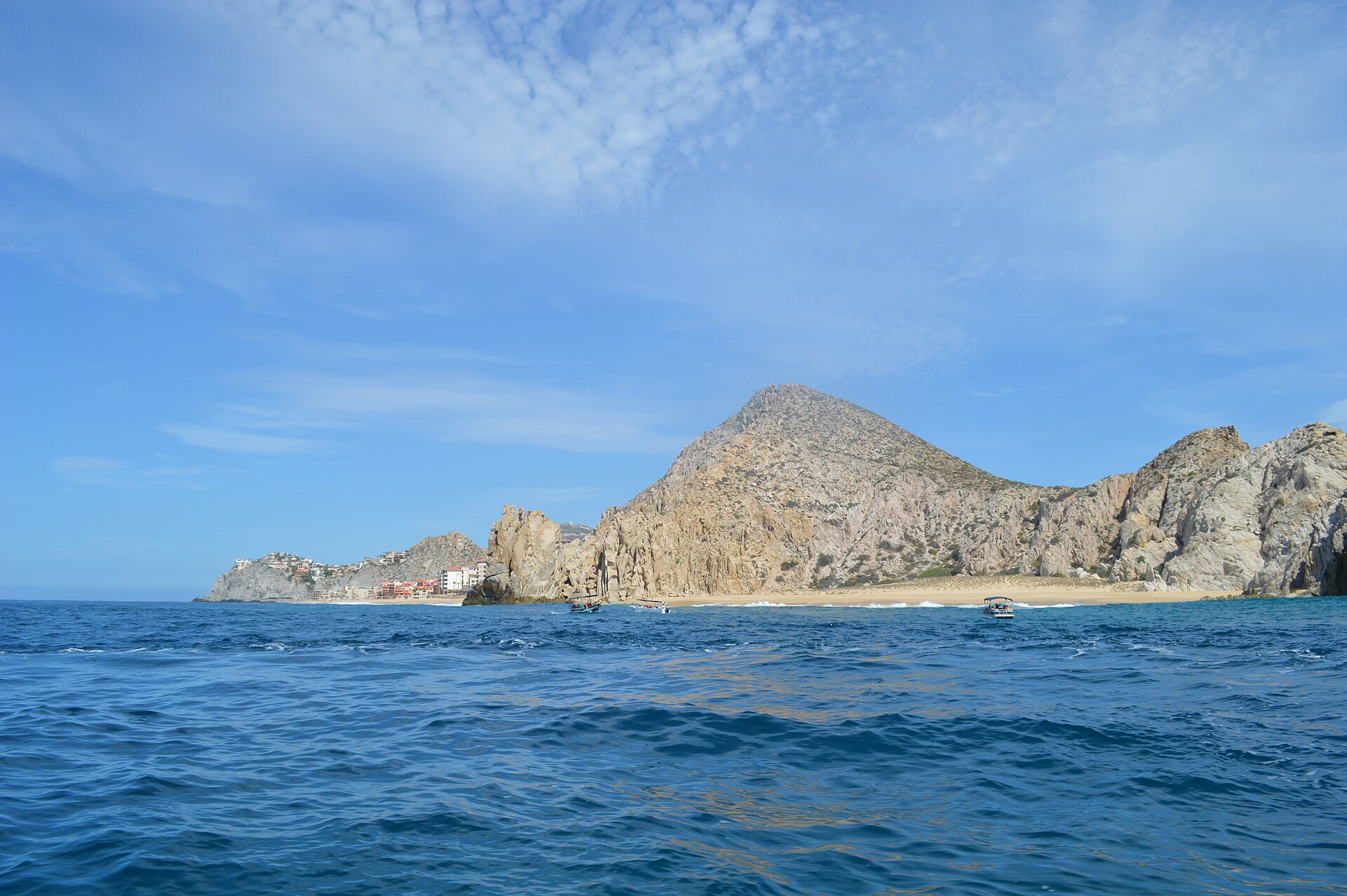
Is it swimmable?
The short answer: yes, on the Sea of Cortez side. The cove tucked against the granite boulders at the Land's End formation is protected from open-ocean swell, and the water is calm enough to wade, float, and swim comfortably when conditions are normal. It is one of the few genuinely swimmable spots in the Cabo San Lucas zone that doesn't require staying on Médano Beach. During the summer months (July through October), even the Cortez side can see increased chop from tropical weather systems, so check conditions before you book your water taxi.
Divorce Beach, the Pacific-facing side of the same strip of sand, is not swimmable under any normal circumstances. The Pacific swell here arrives uninterrupted across open ocean, and the shore break is powerful and unpredictable. Every year visitors underestimate it. The colored flag system used at managed beaches doesn't apply here because there are no lifeguards on duty at Divorce Beach. Treat it as a walking and viewing beach only. If you want to see El Arco from the water or photograph the Pacific side, do it from the water taxi or from the promontory above.
What to expect
The water taxi drops you on the Lover's Beach side, which is a narrow crescent of coarse golden sand backed by boulders and cacti. There are no facilities at all: no restrooms, no food vendors, no shade palapas, no beach chairs. What you get is relative quiet, dramatic scenery, and water that shifts from turquoise to deep blue as it deepens. Sea lions frequent the granite rocks at Land's End and you'll often see them hauled out on boulders within swimming distance of the beach. The snorkeling around the base of the arch formation is worth bringing a mask for, with visibility often reaching 20 to 30 feet in the morning before boat traffic stirs up sediment.
On the short walk across the sand spit to Divorce Beach, the landscape shifts noticeably. The Pacific side is exposed and windier, the sand is darker, and the surf is immediate and loud. It's a good 10-minute walk from drop-off to the Pacific side if the spit is short. Bring everything you need from town: water, snacks, sunscreen, a towel, and footwear that handles sand and rocks. The beach gets full sun all morning, and there is no retreat from the heat except the water itself. Most visitors spend one to two hours here before catching the return taxi.
Wildlife is a consistent highlight. In addition to sea lions, the area around El Arco attracts brown pelicans, blue-footed boobies, and frigate birds year-round. During the gray whale season (mid-December through mid-April), whales pass through the corridor between Cabo San Lucas and the offshore banks, and it's not unusual to spot a blow from the beach. Humpbacks are also present from roughly November through April.
Getting there and parking
There is no road access to Lover's Beach. You get there by water taxi from the marina in Cabo San Lucas, and that's the only option. Water taxis depart from the dock near the main marina entrance, roughly across from the commercial boat slips. The ride takes about 10 minutes each way. Round-trip fares typically run $15 to $25 USD per person, depending on the operator and whether you negotiate. Prices can vary by season and group size, so expect to pay at the higher end during peak months (December through March). The taxis run continuously during daylight hours and you can flag one down from the beach when you're ready to head back.
Snorkel tours and glass-bottom boat tours also stop at Land's End and often include a closer look at the arch formation and the sea lion colony before dropping guests at the beach. These run $30 to $60 per person and add context to the geology and marine life if you're interested. If you're already taking a sunset cruise or a catamaran tour from the marina, confirm whether it includes a Land's End stop.
For parking, you're parking in Cabo San Lucas town, not at the beach. The marina area has paid lots and some metered street parking within a short walk of the water taxi dock. Expect to pay 50 to 100 pesos per hour for a marina-area lot. Driving to Cabo San Lucas from the Corridor or San José del Cabo typically takes 25 to 45 minutes depending on traffic and your starting point.
Best time to go
The clearest and calmest conditions for Lover's Beach fall between November and April. Air temperatures are in the mid-70s to low 80s Fahrenheit, the Sea of Cortez side is reliably calm, and visibility for snorkeling is typically at its best. The water temperature in this period runs in the mid-to-upper 70s, comfortable for most swimmers with a rash guard or light wetsuit on cooler mornings.
Go early. Water taxis start running around 7 or 8 a.m., and the beach before 10 a.m. is a different experience than midday. The light hits the arch and the boulders at a low angle, the snorkeling is clearer before boat wakes and afternoon wind stir things up, and there are fewer people. By noon in peak season, the beach can feel crowded for its size. If you want the place mostly to yourself, aim for a weekday arrival on the first taxi of the day.
July through October brings heat, humidity, and the Pacific hurricane season. Tropical storms and hurricanes don't hit Land's End every year, but when swells build from distant systems, even the Sea of Cortez cove can see unusual chop. Water temperature peaks in this period at 82 to 85 degrees Fahrenheit, which makes it the most comfortable season for the water itself. Check local conditions and ask at the water taxi dock before heading out during hurricane season.
Good to know
Pack light and pack everything you need. There are no amenities on the beach, so your water taxi is also your supply run. A dry bag is worth bringing if you plan to snorkel, since you'll want to keep phones and wallets dry during the ride and while in the water. Most water taxi operators will store a bag for you on the boat if you ask, but that depends on the operator.
Lover's Beach shows up on every Los Cabos highlight list, which means it's also on every cruise ship excursion list. Cruise ship days in Cabo San Lucas (the port gets multiple ships on some days, especially in peak season) push water taxi demand up significantly and add people to the beach by mid-morning. Check whether a ship is in port before planning your visit, since the difference between a cruise day and a non-cruise day at Land's End is noticeable.
For context on how Lover's Beach compares to the region's other options, the best beaches guide covers all of the swimmable beaches in Los Cabos with zone-by-zone notes. If you want a Pacific-facing beach that's dramatic but safer for walking, Solmar Beach is the closest alternative in Cabo San Lucas, though it is not swimmable either. The region's genuinely swimmable coves with snorkeling are mostly in the Corridor: Chileno Beach and Santa Maria Beach are the best of those.
Children are fine at Lover's Beach as long as they're comfortable in calm, open water without a lifeguard present. Younger kids who aren't strong swimmers should stay in the shallow edge of the cove close to the sand. The sea lion rocks are close enough to see clearly from shore, but don't let kids swim toward them: sea lions are wild animals and can be aggressive if they feel cornered.
Frequently asked questions
Can you swim at Lover's Beach in Cabo?
Yes, on the Sea of Cortez side. The cove facing the Cortez is protected from Pacific swell and is calm enough to swim comfortably under normal conditions. The Pacific-facing side, called Divorce Beach, has dangerous surf and strong shore break and is not safe for swimming. There are no lifeguards on duty at either beach.
How do you get to Lover's Beach?
By water taxi from the marina in Cabo San Lucas. There is no road or walking path to the beach. Round-trip fares typically run $15 to $25 USD per person for the roughly 10-minute ride each way. Taxis run during daylight hours and you can flag one down from the beach when you're ready to return.
Is Lover's Beach worth visiting?
For most visitors to Cabo San Lucas, yes. The combination of El Arco, the sea lion colony on the rocks, calm water for snorkeling, and the striking contrast between the two sides of the spit makes it one of the most distinctive spots in the region. The lack of facilities means you need to plan ahead, but the 10-minute water taxi ride and the $15 to $25 round-trip fare are low barriers for what you get.
What should I bring to Lover's Beach?
Water, food or snacks, sunscreen, a towel, and footwear that handles sand and rocks. If you plan to snorkel, bring your own mask and fins since there are no rentals on the beach. A dry bag is useful for keeping electronics dry on the water taxi and in the water. There are no restrooms, no vendors, and no shade structures on the beach.
What is the difference between Lover's Beach and Divorce Beach?
They are the two sides of the same narrow strip of sand at Land's End. Lover's Beach faces the Sea of Cortez and has calm, swimmable water. Divorce Beach faces the Pacific Ocean and has powerful surf and dangerous shore break. You can walk between them in a few minutes. The names are local tradition, not official designations.