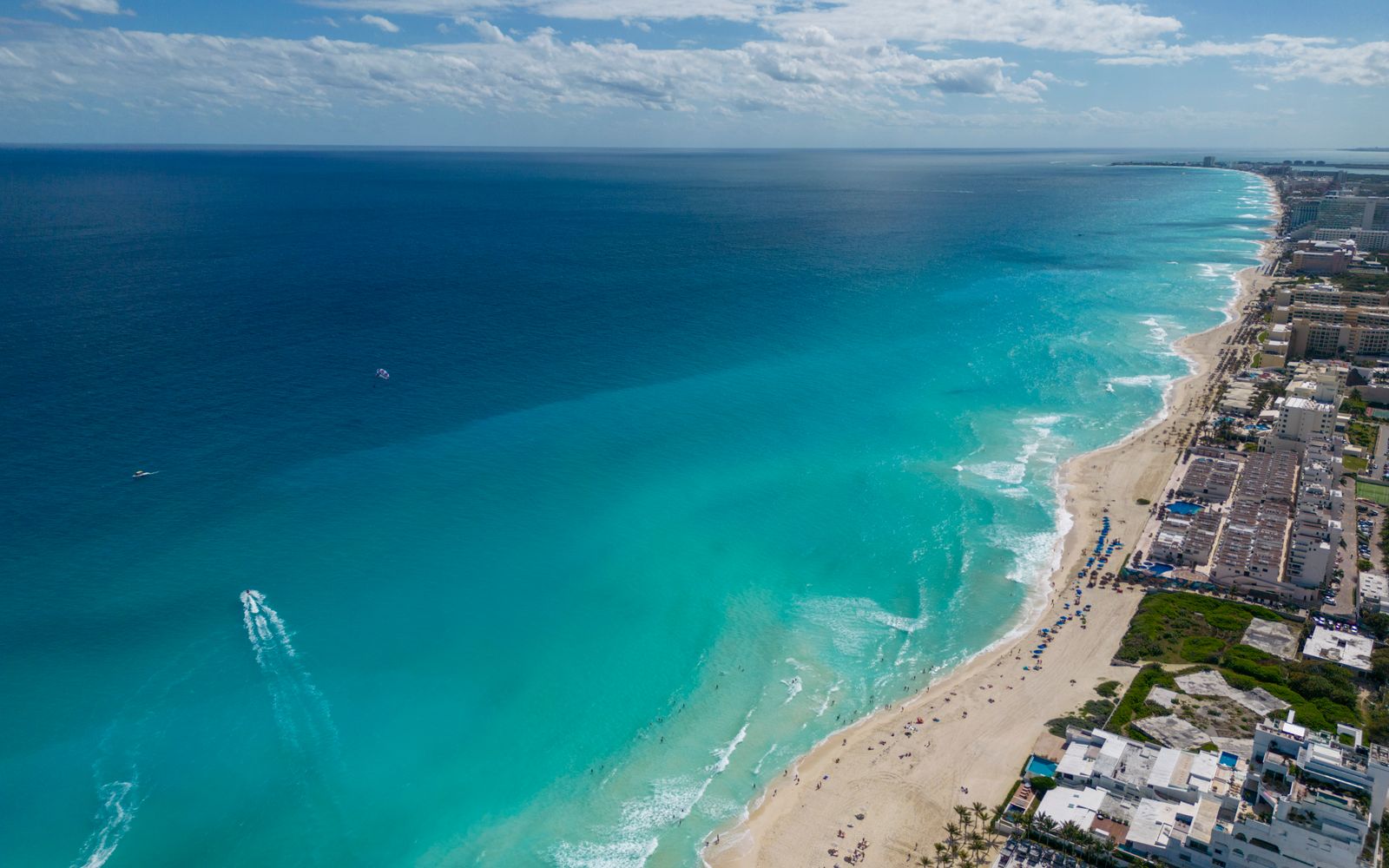
You’re choosing between two of Mexico’s most popular beach destinations, and the right answer depends entirely on what kind of trip you want. Cabo and Cancun both deliver sun, ocean, and resort infrastructure, but they are genuinely different places with different landscapes, different water, and different personalities. Here is an honest comparison so you can make the call.
The Vibe
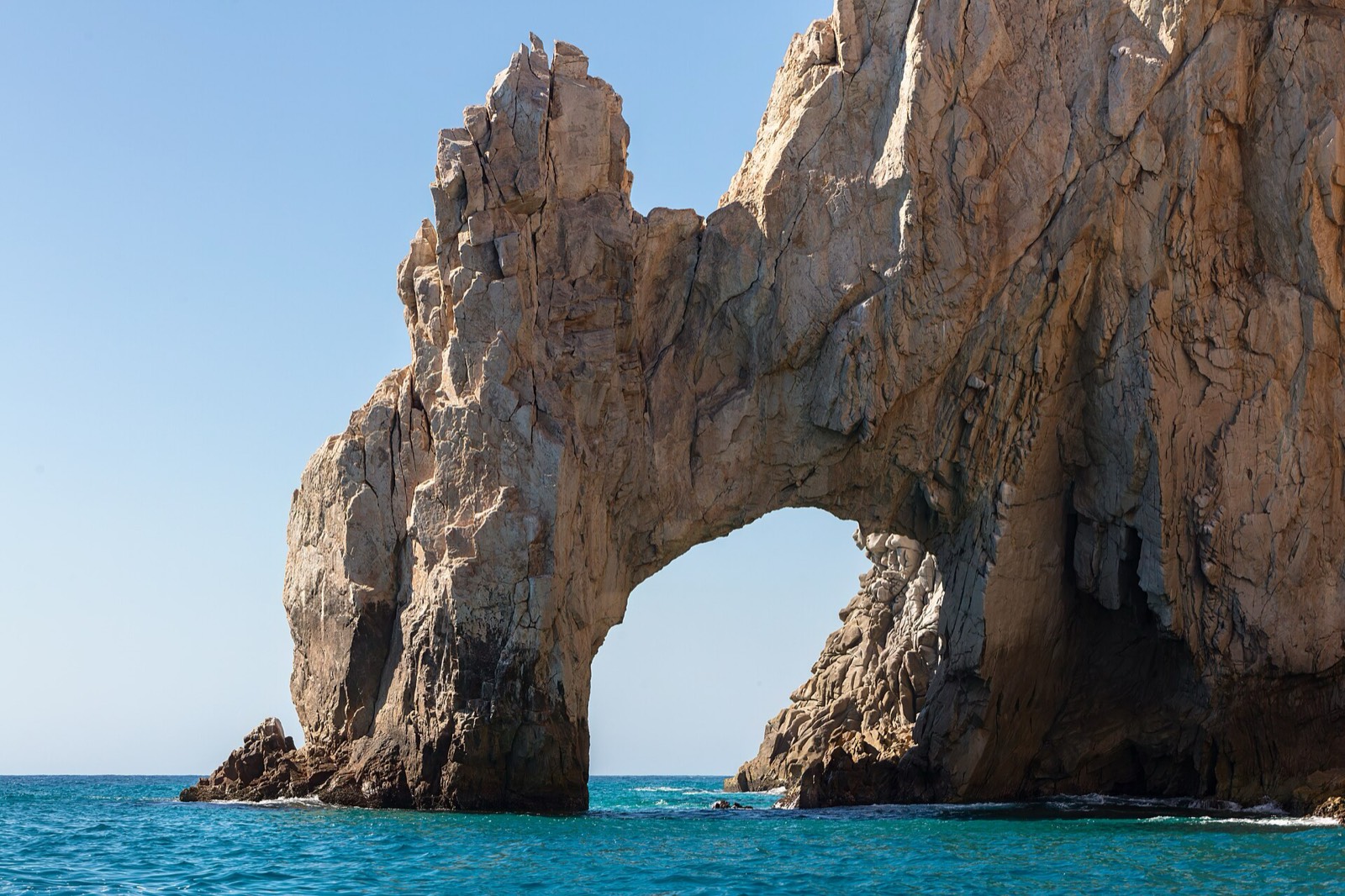
Cabo San Lucas sits at the southern tip of the Baja California peninsula, where the Sonoran Desert meets the Pacific Ocean and the Sea of Cortez. The landscape is stark and dramatic: weathered granite cliffs, towering cactus, and the famous El Arco rock arch rising out of the sea at Land’s End. The energy in Cabo San Lucas proper is resort-meets-marina town, with a lively nightlife strip and a sportfishing culture that has been running for decades. San José del Cabo, about 30 minutes up the coast, is calmer, with a colonial-era town center, an art district, and a Thursday evening gallery walk. In between, the Tourist Corridor is lined with championship golf courses and large-scale resorts.
Cancun is a Caribbean resort city on the Yucatán Peninsula, built almost entirely around tourism since the 1970s. The Hotel Zone is a long, narrow barrier island with a row of all-inclusive resorts facing turquoise Caribbean water. The vibe is generally louder and more party-oriented, with the spring break reputation that comes with it. That said, the Yucatán around Cancun is rich with Mayan ruins, cenotes (freshwater sinkholes), and the Mesoamerican Barrier Reef.
If you want dramatic desert scenery, a strong fishing culture, and the Sea of Cortez, you want Cabo. If you want Caribbean reef diving, Mayan history nearby, and a denser concentration of all-inclusives, Cancun has the edge.
Beaches and Swimmability
This is where the differences get practical. Cabo’s beaches vary a lot, and knowing which ones are swimmable before you arrive matters.
On the Cabo side, Médano Beach in Cabo San Lucas is the main swimmable town beach, roughly a mile of sand with beach clubs and water sports rentals. In the Corridor, Chileno Beach and Santa Maria Beach are protected coves that are genuinely calm and great for snorkeling. Palmilla Beach near San José del Cabo is another safe, family-friendly option. The Pacific-facing beaches at Cabo, including the dramatic stretch at Solmar and the famous Lover’s Beach and Divorce Beach at Land’s End, carry strong currents and are typically not safe for swimming. Check the flag system before you get in the water anywhere in Cabo.
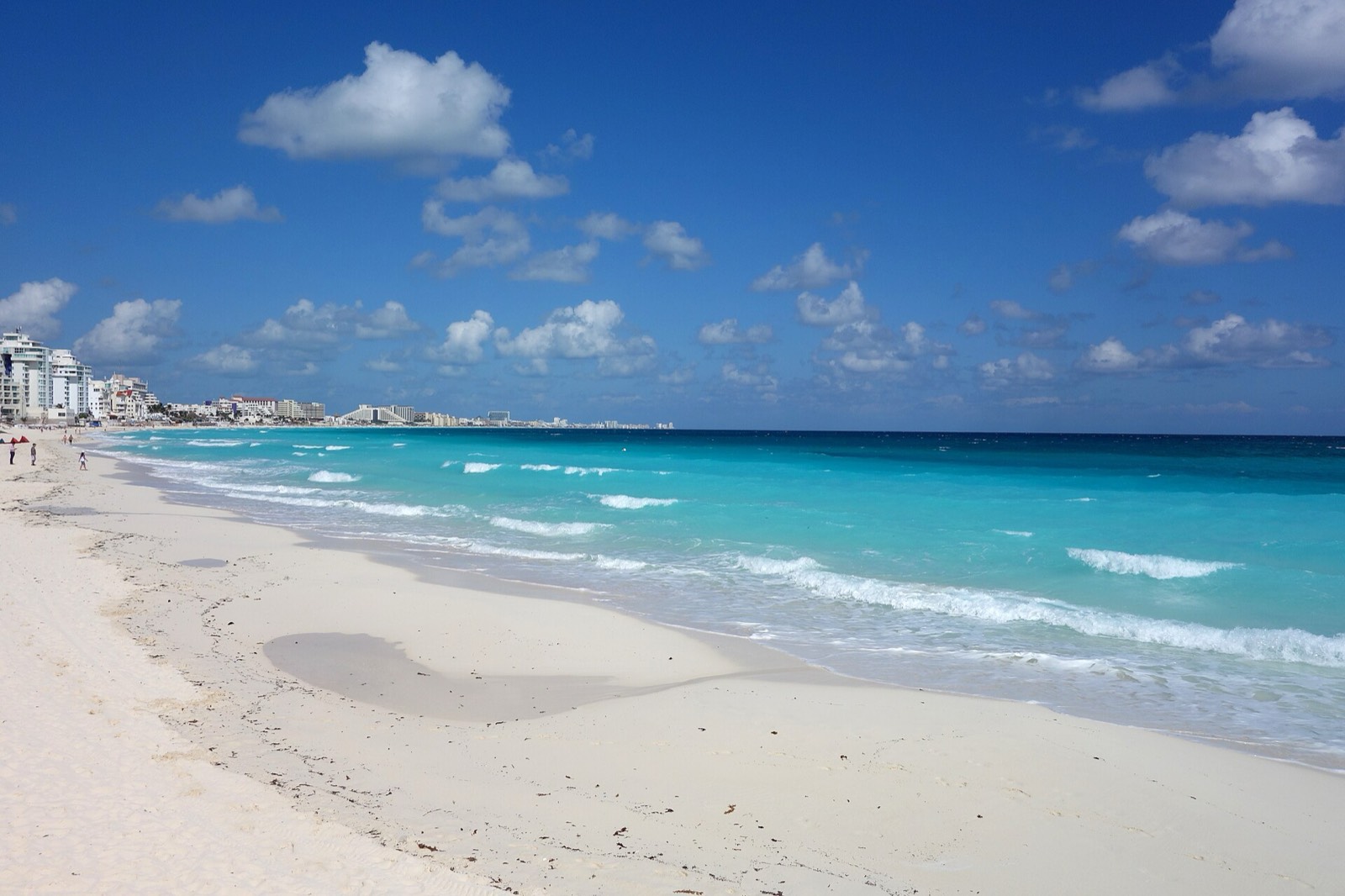
Cancun’s Hotel Zone beaches face the Caribbean, which is generally calmer, warmer, and more consistently swimmable. The Caribbean color, that electric turquoise green, is hard to beat visually. Cancun also has access to the Mesoamerican Barrier Reef for snorkeling and diving, though the healthiest reef sections are further south along the Riviera Maya.
For guaranteed, easy-access swimming on the beach in front of your resort, Cancun has a slight advantage in consistency. In Cabo, you need to pick your spot, but the snorkel coves in the Corridor and the Sea of Cortez side of the peninsula are world-class once you know where to go.
The Water: Sea of Cortez vs the Caribbean
Jacques Cousteau reportedly called the Sea of Cortez “the aquarium of the world,” and the marine biodiversity backs that up. The Sea of Cortez side of Cabo and the Baja peninsula is home to whale sharks, blue and striped marlin, dorado, tuna, sea lions, whale watching from mid-December through mid-April, and one of the best reef systems in North America at Cabo Pulmo National Marine Park.
The Caribbean water off Cancun is warmer year-round and more immediately reef-accessible from the beach, with the Mesoamerican Barrier Reef running the length of the Riviera Maya. For diving into coral walls with tropical fish directly off the shore, Cancun and the Riviera Maya deliver that more easily than Cabo San Lucas proper.
For sportfishing, it is not close. Cabo is one of the top big-game fishing destinations on the planet. The Bisbee’s Black and Blue tournament held each October draws serious anglers from around the world specifically for marlin, and the waters off the Los Cabos coast hold a concentration of billfish that the Caribbean simply does not match. If fishing is any part of your trip agenda, Cabo wins.
For swimming with whale sharks specifically, the La Paz area (about two and a half hours north of Cabo) is the better destination, with a reliable season and organized tours. Cancun also offers whale shark tours seasonally, so this one is roughly even if that is your main goal.
Weather and Seasons
Cabo sits in a desert climate with about 350 sunny days per year. The peak season, November through April, brings dry air, low humidity, and daytime highs in the 75 to 85 degree Fahrenheit range. May and June are hot and dry. July through October is hot and humid, with Pacific hurricane season peaking August through October. If you are trying to choose the best time to visit, the sweet spot for most travelers is October through April.
Cancun has a tropical Caribbean climate with heat and humidity year-round. Hurricane season is similar, overlapping with the Caribbean storm track from June through November. The Yucatán can also experience strong offshore winds called “Nortes” in winter that kick up the sea. Cancun’s dry season, roughly December through April, is its most comfortable.
Both destinations are best in the November to April window. Neither is ideal in the peak of Atlantic and Pacific hurricane season, though Cabo tends to see less direct hurricane action than the Yucatán.
Activities Beyond the Beach
Cabo’s signature activities center on the water and the desert. Sportfishing for marlin, tuna, and dorado is the flagship draw, with dozens of charter operations running out of the marina in Cabo San Lucas. Whale watching runs December through April. Snorkeling at Santa Maria and Chileno coves in the Corridor, and at Cabo Pulmo for serious divers, is a genuine highlight. ATV and UTV tours through the desert landscape around the Sierra de la Laguna foothills are popular and genuinely scenic. Sunset dinner cruises around the arch at Land’s End are a staple. Golf in the Corridor, with courses designed by Jack Nicklaus, Greg Norman, and Tom Fazio, is a major category of its own.
For a change of pace from the resorts, Todos Santos, about an hour north on the Pacific side, offers a surfing beach at Cerritos, art galleries, and a slower pace with some excellent restaurants. La Paz, two to two and a half hours north, adds Balandra Beach (one of the most photographed beaches in Mexico) and sea lion snorkeling.
Cancun’s biggest advantage in activities is cultural access. The Mayan ruins at Chichen Itza are a few hours by road. Tulum and the Riviera Maya cenotes are an easy day trip. For travelers who want to combine Caribbean beach time with significant archaeology and cultural history, Cancun is clearly better positioned. Cabo does not have that kind of pre-Columbian heritage nearby.
Food and Dining
Both destinations eat well. Cabo’s restaurant scene has grown significantly, with strong options across price points in both Cabo San Lucas and San José del Cabo’s art district. Seafood is the natural focus: fish tacos, fresh tuna tostadas, grilled whole fish, and ceviches made with the day’s catch. The Corridor resorts all have polished resort dining, and San José’s historic center has a handful of genuinely good independent restaurants.
Cancun’s Hotel Zone is heavy on resort buffets and chain dining within the zone itself, but Cancun city (outside the Hotel Zone) and the Riviera Maya towns have excellent regional Mexican food, particularly in Playa del Carmen and Tulum. Yucatecan cuisine, with dishes like cochinita pibil and sopa de lima, is distinctive and worth seeking out.
Neither destination is lacking, but for a more locally-specific food experience, Cabo’s San José del Cabo and the Todos Santos area offer something a bit more rooted in a specific regional identity.
Cost
Both are Mexican resort destinations, and both skew toward mid-range to high-end. That said, some practical cost notes.
In Cabo, all-inclusive resorts in the Corridor run roughly $400 to $800 per night per couple at mid-tier properties, and significantly higher at luxury brands. Fishing charters for a full day on a shared boat typically run $150 to $250 per person; private charters for 4 to 6 people range from $800 to $1,800 depending on boat size and duration. Food in the tourist corridor skews expensive; eating at local spots in San José del Cabo or Cabo San Lucas brings costs down considerably.
Cancun’s Hotel Zone has a wider range of price points with more budget all-inclusive options competing for volume. You can often find lower-priced all-inclusives in Cancun than in the Corridor. However, excursions (Chichen Itza, cenote tours, reef dives) add up quickly if you are doing day trips.
Cabo tends to be slightly more expensive per night at a comparable resort tier, but the two destinations are in the same ballpark for most travelers. Budget travelers may find more options in Cancun.
Who Each Destination Is For
Choose Cabo if:
- Sportfishing is on your agenda at all
- You are drawn to dramatic, desert-meets-ocean scenery
- You want whale watching between December and April
- You prefer the Sea of Cortez’s biodiversity and calmer interior water for snorkeling
- You want a mix of nightlife in Cabo San Lucas and a quieter, more boutique feel in San José del Cabo
- Golf is part of the trip
- You are planning a honeymoon, bachelorette, or couples retreat that leans toward scenic over party-heavy
Choose Cancun if:
- You want Caribbean turquoise water consistently swimmable right off the beach
- Mayan ruins are on your itinerary
- You prefer all-inclusive pricing and want the widest selection at multiple price points
- You are drawn more to reef diving on the Mesoamerican Barrier Reef
- Budget is a primary driver
The Short Version
Cancun is a well-built, accessible Caribbean resort experience with cultural bonus points from the Yucatán. Cabo is a more dramatic, more distinctive destination with the Sea of Cortez, the desert, and a sportfishing heritage that draws a specific kind of traveler. For our money, the landscape alone at Cabo, from El Arco to the cactus-studded hills to Cabo Pulmo’s reef, is harder to replicate anywhere else in Mexico.
Still weighing your options once you commit to Cabo? Read the Los Cabos Travel Guide for the full overview, or figure out how many days you need in Cabo before you book. If you are already set on Los Cabos and trying to pick your base, the comparison between Cabo San Lucas vs San José del Cabo is the next thing to read.