One of the most common mistakes first-time visitors make in Cabo is assuming every beach is a swimming beach. They aren’t, and the distinction matters. Some of the most dramatic, photographed shorelines in Los Cabos have strong shore break and rip currents that will knock you over and pull you out. The beaches that look the most inviting from a hotel window are sometimes the ones that will get you into trouble.
This guide cuts through the confusion. It tells you which beaches are genuinely safe to swim, which ones to avoid, and how to read the flag system so you don’t end up in a dangerous situation on your first afternoon.
For a broader overview of the region’s coastline, start with the Los Cabos Travel Guide or browse the full best beaches roundup.
Why Cabo Has So Many Non-Swimmable Beaches
Los Cabos sits at the very tip of the Baja Peninsula, where the Pacific Ocean meets the Sea of Cortez. That geography creates two completely different water environments within a few miles of each other.
The Pacific side faces open ocean with no land barrier between you and Hawaii. Waves arrive with full fetch, generating powerful shore break, strong undertow, and rip currents that shift with the swell. Even on calm-looking days, the water can be deceptively dangerous. Hotel staff and lifeguards will tell you the same thing: don’t swim on the Pacific side unless you’re at a protected beach.
The Sea of Cortez side is calmer. The gulf acts as a natural barrier, sheltering the water from the Pacific swell. Beaches on the Cortez side, and beaches inside protected rocky coves, are where you want to be swimming.
The flag system at staffed beaches tells you the current conditions:
- Green flag: Calm, safe conditions. Get in.
- Yellow flag: Exercise caution. Strong swimmers only.
- Red flag: Dangerous conditions. No swimming. This is not a suggestion.
- Black flag: Extremely dangerous, no swimming under any circumstances.
Most resort beaches fly flags consistently. If you’re at a beach without a lifeguard or flag system, treat it as yellow until you can assess the conditions yourself.
The Beaches That Are Safe to Swim
Médano Beach, Cabo San Lucas
Médano is the main swimming beach in Cabo San Lucas and the most accessible swimmable stretch of water in the region. It sits on the Sea of Cortez side of the tip, protected from the Pacific swell by the Land’s End headland. The water is calm, shallow near shore, and warm most of the year, reaching the low 80s Fahrenheit between August and October.
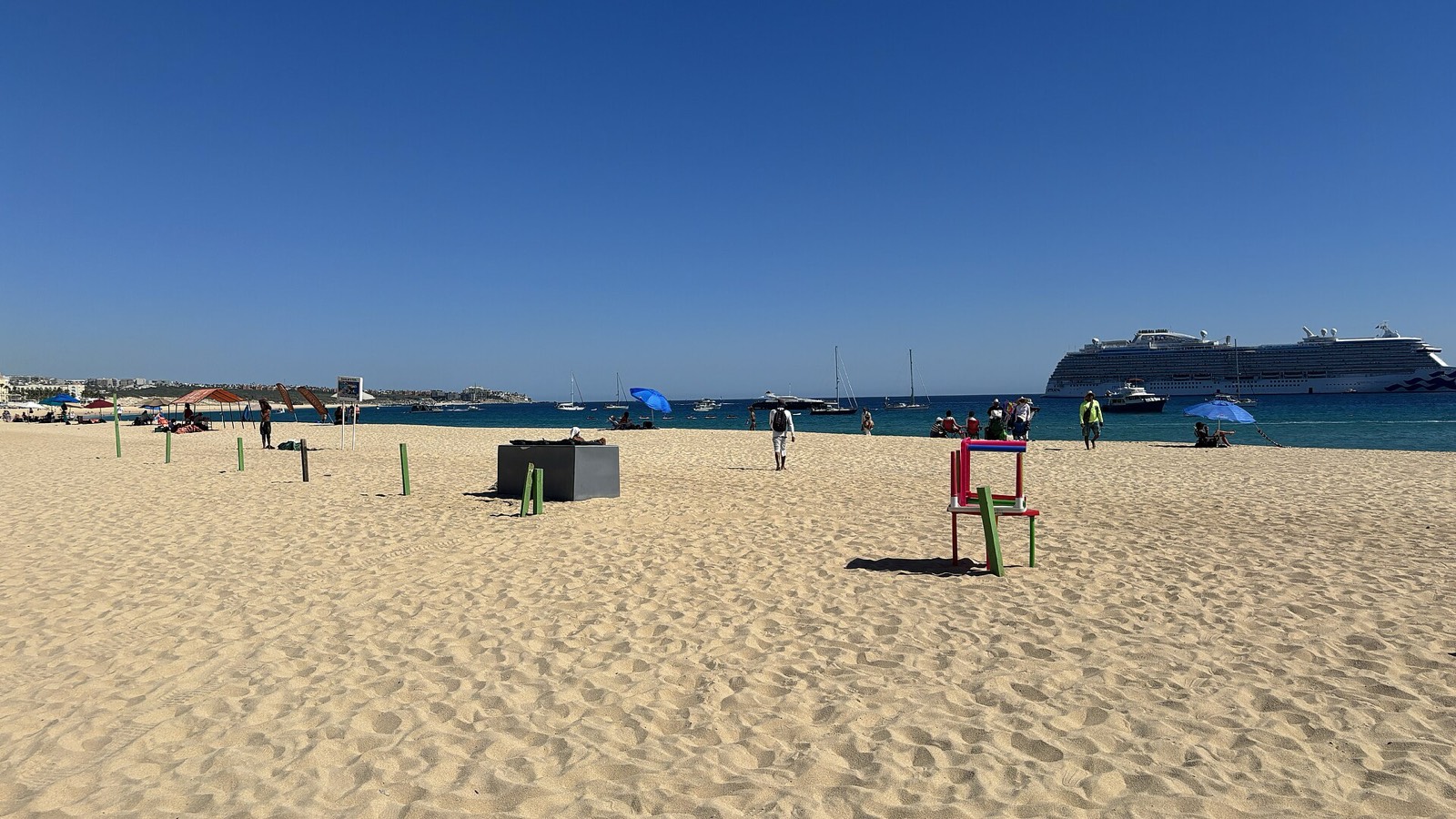
The beach runs roughly two kilometers along the bay and is lined with beach clubs, palapa bars, and water sports vendors. You can rent jet skis, paddleboards, kayaks, and parasail rigs directly on the sand. It gets crowded during peak season (November through April), especially near the main beach club strip, but you can walk north along the shoreline to find quieter sections.
Insider tip: the water-taxi dock near the main beach club area is a good landmark for orientation. From there, walking south toward Land’s End keeps you in calmer, shallower water. The southern end of Médano near the rocks is a favorite spot for snorkelers who want to see fish without taking a boat.
Chileno Beach, The Corridor
Chileno is one of the best all-around beaches in the region. It sits in a natural protected cove about 14 kilometers east of Cabo San Lucas along Highway 1, and it earned a Blue Flag certification for water quality and safety standards. The bay is horseshoe-shaped, which blocks the swell and keeps the water consistently calm.
The snorkeling here is among the best in the Corridor. Rocky outcroppings on both sides of the cove shelter fish populations, and visibility can reach 20 to 30 feet on a good day. Shaded palapas are available on the beach, and there are restrooms and rinse stations nearby.
Chileno is a public beach, which means no resort gatekeeping, but parking can fill up on weekends. Get there before 10am if you want a palapa and easy parking. Water depth increases gradually, making it genuinely family-friendly.
Santa Maria Beach, The Corridor
Santa Maria sits about 5 kilometers east of Chileno and operates as a protected marine sanctuary. The horseshoe cove is smaller than Chileno and has no facilities at all (no palapas, no restrooms, no vendors), but the snorkeling is exceptional. The bay is a recognized fish nursery, and the reef running along both rock arms of the cove holds parrotfish, puffer fish, rays, and sea turtles on a regular basis.
The tradeoff for the pristine water is the lack of amenities. Bring your own water, sunscreen, and snorkel gear. Most people access Santa Maria through a snorkeling tour or by driving down the access road from Highway 1 and hiking down a short path to the beach. The walk is about 5 minutes but unshaded in the middle of the day.
Santa Maria sees fewer visitors than Chileno because of the no-facilities setup, which means the water is quieter and the snorkeling is less crowded. For experienced swimmers, this is one of the best hours you can spend in Los Cabos.
Palmilla Beach, San José del Cabo
Palmilla sits near the eastern edge of the Corridor, closer to San José del Cabo than to Cabo San Lucas. It’s a calm, family-friendly cove sheltered by a rocky point, with access near the One&Only Palmilla resort and the small Palmilla marina.
The water here stays calm because the bay orientation cuts the swell. It’s a good option if you’re staying on the San José end of the Corridor and don’t want to drive to Chileno or Santa Maria. The beach itself is quieter than Médano and feels less resort-packaged. A small village, Playa Palmilla, sits at the end of the access road with a few restaurants and fishing boats.
Insider tip: this is one of the better spots to watch local fishermen bring in their catch in the morning, around 7 to 9am, before the recreational beach crowd arrives.
Balandra Beach, La Paz (Day Trip)
Balandra is about two hours north of Cabo San Lucas by car, near the city of La Paz, and it is genuinely one of the most beautiful beaches in Mexico. The bay is a shallow lagoon with water so calm and clear that you can walk 50 meters from shore in waist-deep turquoise water. The sand is fine and white, and the surrounding red volcanic hills make the color contrast striking.
The catch: the Mexican government caps daily visitors at around 700 people to protect the ecosystem. Reservations are required, and they often book out on weekends. If you’re planning a day trip, book well in advance or plan to go on a weekday. Go during the best time to visit (October through April) for the calmest water and the most manageable heat.
The shallow water makes Balandra ideal for families with small children. The lagoon averages one to two feet deep over a large area. Bring your own food and water; the on-site facilities are minimal.
The Beaches You Should Not Swim At
Solmar Beach
Solmar runs along the Pacific side of Land’s End in Cabo San Lucas. It is one of the most dramatic stretches of sand in the region, set against the granite headland with views toward the Arch. It is also not swimmable. The shore break is powerful, the undertow is strong, and drownings have occurred here. It’s worth visiting for a sunset walk or to watch waves crash against the rocks, but stay out of the water.
Divorce Beach (Land’s End)
Divorce Beach sits on the Pacific-facing side of Lover’s Beach, reachable by water taxi from the Cabo marina. The Sea of Cortez side of Lover’s Beach (the beach itself) is calm and safe for wading and swimming. The Divorce Beach side faces open Pacific water and is dangerous. Many visitors who arrive by water taxi don’t realize there are two sides with opposite conditions. Stay on the Sea of Cortez side.
Costa Azul and Zippers
Costa Azul, just south of San José del Cabo, is a surf beach. Zippers, The Rock, and Old Man’s are named breaks that attract intermediate to advanced surfers. The wave energy that makes it good for surfing makes it bad for casual swimming. If you’re not a surfer, come to watch, not to swim.
Open Pacific Corridor Beaches
Several undeveloped beaches along Highway 1 look beautiful from the road but face open Pacific water. These include stretches near El Tule break. Unless you’re surfing, these are walking beaches, not swimming beaches.
Lover’s Beach: The Swimmable Cove Exception
Lover’s Beach deserves its own explanation because it generates more confusion than any other Cabo beach. You reach it by water taxi from the marina (roughly $20 USD round trip, boats run continuously during daylight hours). The boat drops you at a small cove on the Sea of Cortez side at the base of Land’s End.
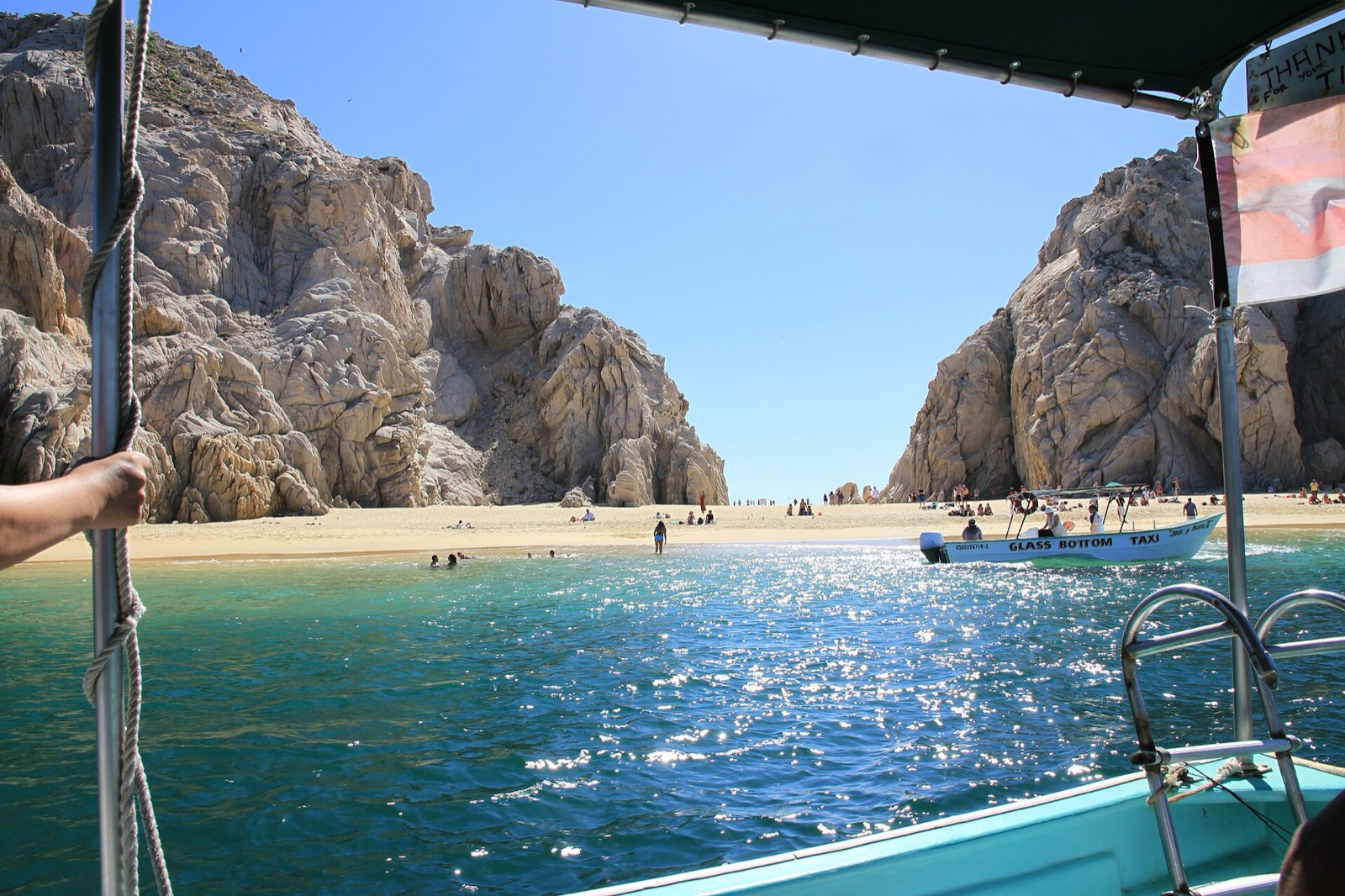
That cove is safe to swim. The water is protected, calm, and clear. You can see the Arch from the beach and watch sea lions sunning themselves on the rocks nearby. This is a genuinely worthwhile stop, especially for a romantic things to do in cabo experience.
The problem is that a short path across the narrow sandbar leads to the Pacific side, which is Divorce Beach. The Pacific side looks like a beach extension of the same spot, but the conditions are completely different. Don’t cross to the Pacific side for swimming.
Water Temperature by Season
The Sea of Cortez runs warm year-round compared to most Pacific destinations. Here’s what to expect:
- November to April (peak season): Water temperatures range from the mid-60s to low 70s Fahrenheit. Comfortable for swimming, cool enough that some visitors wear a rash guard.
- May and June: Water warms into the mid-70s. Good conditions.
- July to October: Peak water temperatures, often hitting 80 to 84 degrees Fahrenheit. The warmest swimming of the year coincides with hurricane season, so keep an eye on weather.
Planning Your Beach Time
If you’re staying in Cabo San Lucas and want to swim without renting a car, Médano Beach is your primary option and it’s fully walkable from the marina. For snorkeling quality, Chileno and Santa Maria are worth the 20 to 30-minute drive east along Highway 1.
For a multi-day trip, a day at Balandra near La Paz is worth building into your itinerary if the shallow lagoon experience appeals to you. The two-hour drive is easy on a good highway and the experience is different enough from the Corridor beaches to justify the trip.
Groups planning a beach-focused trip can find more itinerary ideas in the cabo bachelorette party ideas guide, which covers beach club logistics alongside the other planning details.
The short version: if you stick to Médano, Chileno, Santa Maria, and Palmilla, you’ll have safe, high-quality swimming at every stop. Watch the flags, don’t swim alone at unfamiliar beaches, and give the Pacific side the respect it deserves.