Overview
Camel tours in Los Cabos run almost exclusively on the Pacific side of the peninsula, west of Cabo San Lucas. The terrain here is completely different from the tourist corridor and the Sea of Cortez coast: volcanic rock, sandy wash roads, cardon cactus, and open Pacific views without a resort in sight. Most operations work out of a base camp or ranch in the foothills or near a beach access point in this area. You'll typically reach the tour start via included hotel pickup, a 20 to 40-minute ride from the Cabo San Lucas marina or hotel zone.
The activity itself is a hybrid: part beach excursion, part desert trail ride, and part cultural experience. You spend time in the saddle on the camel, then the tour usually shifts to the surrounding desert on foot or via ATV to round out the experience. A tequila tasting or agave demonstration is standard at most operations. Camel tours are consistently rated as one of the more memorable activities in Cabo, especially for travelers who've already done the charter fishing, whale watching, and snorkel cruises. For couples, it pairs well as a daytime activity before a romantic evening in the area.
What to expect
A typical tour runs two to three hours from pickup to drop-off. You'll arrive at a ranch or base camp where the guides introduce you to the camels and give a short orientation. Camels mount from a crouching position using a step or platform, and the lurch when they stand up is the moment that gets the most photos. The ride itself is steadier than it looks; camels walk at roughly the pace of a slow horse, and the saddles are padded and designed for tourists. Most guides speak English and keep the group moving at a comfortable pace.
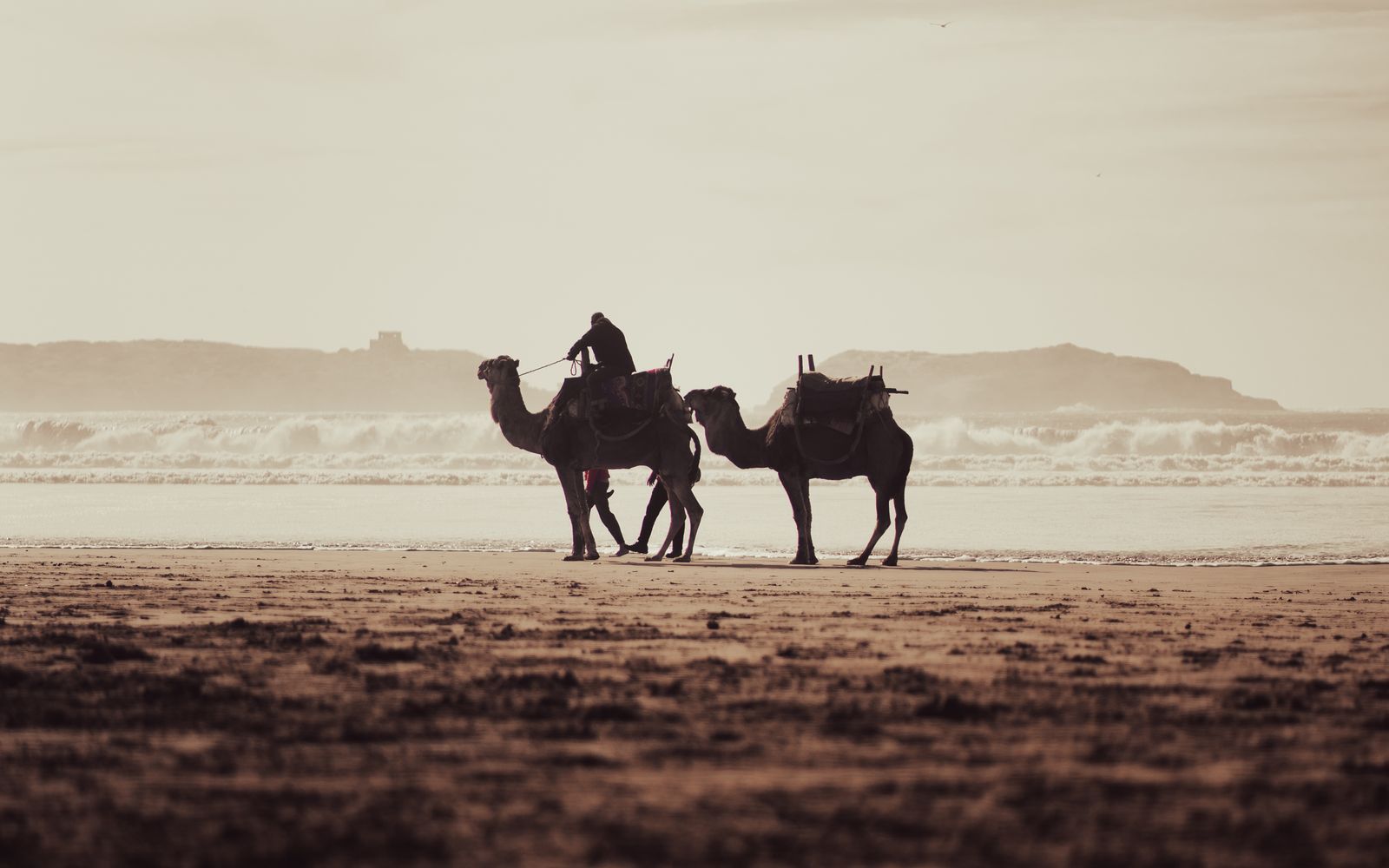
The route typically takes you along a stretch of Pacific beach or dunes, then loops into the desert scrubland. You'll pass through stands of cardon cactus, which are the tall columnar cacti native to Baja that can reach 60 feet and live for centuries. Guides generally explain the local ecosystem, point out wildlife, and talk about traditional uses of agave and desert plants. Some tours integrate a short ATV segment alongside the camel ride, which adds variety and covers more terrain. The ATV and camel combination is one of the most common package configurations sold in Cabo.
The tequila or mezcal tasting at the end is included in most standard packages. It usually covers a few regional varieties with some basic explanation of the distillation difference between tequila and mezcal. Lunch or snacks are included on the longer packages, and most operators offer vegetarian options if you ask in advance. You'll return to your hotel by early afternoon in most cases, leaving the evening open.
Best season
Camel tours run year-round in Los Cabos, but the most comfortable window is November through April. During peak season, daytime temperatures on the Pacific side run from the low 70s to mid-80s Fahrenheit, the sun is strong but the air is dry, and a hat and sunscreen are enough to stay comfortable for a two to three-hour outdoor activity.
May and June are still workable: it gets hotter, pushing into the high 80s and low 90s, but the desert mornings are usually manageable for a 9 a.m. or 10 a.m. tour start. Operators typically shift start times earlier in the warmer months to beat the midday heat. July through October brings the humid season and occasional tropical weather from Pacific systems. Tours still run, but humidity makes the desert feel significantly warmer than the air temperature suggests, and you should drink more water than you think you'll need.
If your travel dates land in peak season and you're putting together an itinerary, a camel and desert tour works well as a half-day morning activity that leaves the afternoon free for the beach or a boat trip. It fits cleanly into a 3 days in Cabo schedule without eating up a full day.
Typical prices
Camel and desert tour prices in Los Cabos depend on what's bundled into the package. A basic camel ride with hotel transfer, guide, and tequila tasting typically runs in the range of $65 to $110 per person. Packages that add an ATV segment alongside the camel ride are the most popular configuration and usually come in between $90 and $140 per person. Full packages with lunch, extended desert time, and both ATV and camel components can reach $150 to $180 per person. Children generally get a reduced rate, typically 30 to 40 percent below the adult price.
All prices listed here are estimate ranges only. Actual rates vary by operator, season, and whether you book directly or through a hotel concierge or third-party booking platform. Booking through your hotel is convenient but often adds a 15 to 25 percent markup versus going direct. The hotel concierge can usually match or come close to direct rates if you ask. Tips for guides are customary and not included in the listed price; $10 to $20 per person is a reasonable range depending on group size and your experience.
This activity is one of the better values for the time in Cabo compared to the per-hour cost of fishing charters or private boat trips. For a full breakdown of what activities and accommodation cost in Los Cabos, the Tour Operators directory lists local contacts with current rates.
How to book
Most camel tours are sold through hotel concierge desks, marina kiosks along the Cabo San Lucas boardwalk, and online booking platforms. If you book on the marina boardwalk, you'll often find vendors who can slot you into a departure the same day or the next morning. Advance booking of three to five days is enough to secure your preferred date and time during most of the year, though December through March you should book before you arrive.
The tour operators that run camel excursions in Cabo typically include hotel pickup and return in the price, so you don't need a rental car or taxi to get to the base camp. Confirm your hotel is in the pickup zone when booking; the central Cabo San Lucas hotel zone and the corridor resorts are almost always included, but properties farther toward San José del Cabo may require an additional transport fee.
For a side-by-side look at what the area's Tour Operators offer and how camel tours compare to other activity options, browse the directory. If you're building a longer trip itinerary, this activity pairs well with ocean-based experiences on alternate days. The Whale Shark and Sea Lion Swims in La Paz and Sportfishing are the kinds of activities that round out a Los Cabos week alongside a desert excursion.
Frequently asked questions
Do I need any experience riding animals to do a camel tour in Cabo?
No experience required. Camel tours in Los Cabos are designed for first-timers with no riding background. The guides handle everything, including helping you mount and dismount, and the camels are accustomed to tourist groups. The pace is slow and the ride is steady once the camel is standing. Most participants find it much less intimidating than they expected.
Is there a weight or age limit for camel rides?
Most operators list a weight limit in the range of 220 to 250 pounds and a minimum age of around 4 to 6 years for children. Limits vary by operator, so confirm when booking if this is a concern. Young children often ride with a parent on the same camel, depending on the operation's setup.
What should I wear and bring on a camel desert tour?
Wear comfortable, close-toed shoes or sneakers. Sandals are not ideal for the desert terrain. Bring sunscreen, a hat, sunglasses, and a reusable water bottle. The base camps typically provide water, but having your own in the desert is a good habit. A light long-sleeve layer is useful for sun protection, especially in summer when the UV index is high.
Are camel tours in Cabo good for couples or bachelorette groups?
Yes, both. The experience is casual and social, which makes it a natural fit for groups looking for something fun and photogenic rather than high-intensity. For couples, it tends to be a low-key and memorable morning activity. Bachelorette groups often pair the camel ride with the included tequila tasting and ATV segment for a half-day that covers multiple activities in one booking.
Can I combine a camel tour with other activities on the same day?
Most camel tours wrap up by early afternoon, leaving the second half of the day free. A morning camel and desert tour pairs well with an afternoon at the beach, a sunset cruise, or dinner in the marina. If you're fitting this into a packed schedule, a 3 days in Cabo itinerary can help you sequence activities so nothing gets rushed.