Is it swimmable?
Yes, and that's the short version of what makes Médano special. The beach sits on the Sea of Cortez side of the Land's End peninsula, protected from the Pacific swells that make most Cabo-area beaches dangerous. The water here is calm enough for kids, casual swimmers, and anyone who just wants to float. There are no rip currents to speak of, no heavy shore break, and no posted red flags on normal days.
Water temperatures track with the Sea of Cortez season: warmest from August through October, when surface temps reach the low 80s Fahrenheit, and coolest from January through March, when they dip into the low 70s. That's still warm enough for comfortable swimming year-round, though guests visiting in January or February sometimes find it brisk without a wetsuit. The bay itself is shallow enough to wade well out from shore, which makes it one of the better family swimming spots in the region.
The one caveat worth mentioning: Médano gets busy. On peak-season weekends from November through March, the water fills with jet skis, banana boats, and parasail takeoffs running in both directions parallel to shore. Swimmers generally stay closer to the beach clubs and let the water sports operate in the designated lanes further out. Pay attention to the boat and personal watercraft traffic if you plan to swim any real distance.
What to expect
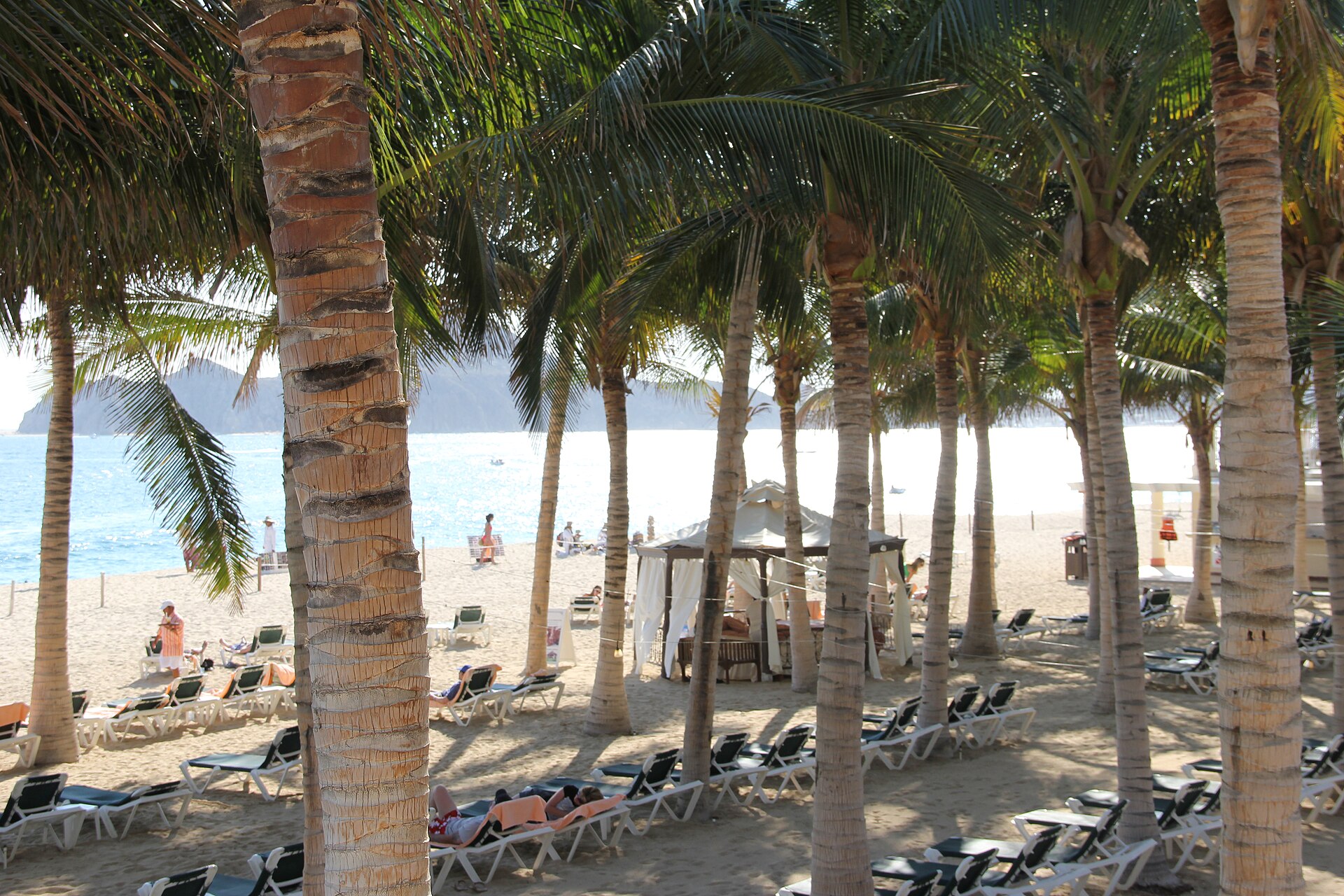
Médano runs from the eastern edge of the marina area toward the residential developments at the far end of the bay. The beach is wide, the sand is golden-tan, and the views look straight toward El Arco and the granite headlands at Land's End. Those formations frame virtually every photo taken from the beach, and the water taxi pier at the marina end is where boats leave for Lover's Beach and Divorce Beach and the snorkeling sites around Land's End.
The main beach club strip runs along the middle third of the beach. Most clubs rent lounge chairs and umbrellas for around $15 to $30 per person, with a food and beverage minimum applied toward the cost. You can also set up on the open sand without paying a club fee, but the public sections fill faster than the clubs during peak season. Beach vendors circulate constantly selling everything from fresh fruit to handmade jewelry. The pitching is persistent, especially near the clubs. A polite but firm 'no gracias' is the right tool.
Water sports operations set up directly on the beach and offer parasailing (around $60 to $80 per person), jet ski rentals (around $60 to $90 per 30 minutes), banana boat rides, paddleboard rentals (around $20 to $40 per hour), kayaks, and boat tours. Prices are negotiable if you book directly with the operators rather than through a hotel concierge, particularly if you go early in the morning or mid-week. The water sports are mostly safe and well-run, but always confirm what's included in any tour or rental before you pay.
The beach also fronts a row of beachfront restaurants and bars directly above the sand. Drinks and food at these spots run higher than downtown Cabo pricing, but you're paying for the setting. A cold beer or margarita with a direct view of Land's End at sunset is not an experience that requires defending.
Getting there and parking
Médano is easy to reach from anywhere in central Cabo San Lucas. From the marina, it's a 5 to 10 minute walk east along the waterfront. Taxis from downtown hotels typically run $5 to $10. Uber works in Cabo San Lucas (unlike at the airport), and the app is reliable in the marina area.
Parking near the beach is limited and increasingly difficult during peak season. There is some street parking along Boulevard Marina and in the blocks immediately behind the beach, but you'll circle for a while during busy mornings. The practical advice: walk if your hotel is within 15 minutes, or take a taxi. If you're staying further out, most Corridor hotels offer scheduled shuttle service to Médano or easy cab access for under $20. Driving to the beach and trying to find a spot on a Saturday in February is genuinely frustrating and not worth the stress.
The beach is public, which means no resort or club can block your access to the sand itself. The clubs control their chairs and services, but the waterline is open to everyone.
Best time to go
November through April is peak season and the most comfortable time for beach use. Daytime temperatures run from the mid-70s to low 80s Fahrenheit, humidity is low, and the water is clear. December through February is the peak of peak season when the beach is at its most energetic and most crowded. Mornings before 10 a.m. are noticeably quieter than afternoons, and weekdays beat weekends significantly.
May and June are hot and dry, with daytime highs pushing into the upper 80s to mid-90s. The beach crowds thin substantially and prices drop at beach clubs and on water sports rentals. The swimming is still excellent, and the heat is manageable if you're in the water.
July through October brings the hurricane season and high humidity. The water is warmest of the year during this window, but afternoon storms are possible, particularly from late August through September. Morning beach time works well; afternoons can get uncomfortable. This period sees the fewest US tourists, which means a noticeably quieter beach and lower prices across the board. Whale watching season, which runs from mid-December through mid-April for gray and humpback whales, overlaps with the prime beach months, making that stretch particularly good for combining beach days with other activities.
Sunrise is worth setting your alarm for at least once. The light on the granite formations at Land's End during the first hour after dawn is dramatic, the beach is nearly empty, and the water is glassy before the wind picks up. Most tourists show up around 10 a.m. and stay through mid-afternoon.
Good to know
The beach clubs typically open around 9 to 10 a.m. and close by 6 or 7 p.m. If you want prime chairs directly in front of a club's bar setup, arrive by 10 a.m. on weekdays and by 9 a.m. on weekends in January through March. Chairs go fast at the most popular spots.
Sunscreen is non-negotiable. The Baja sun at sea level is stronger than what most US visitors are used to, particularly in the late morning hours when UV index peaks. SPF 50 and reapplication every 90 minutes to two hours is the practical standard. Reef-safe sunscreen is encouraged: several Corridor beaches and coves are marine protected areas, and even though Médano itself isn't a formal sanctuary, the habit is worth keeping.
The beach is lined with vendors, and while most are friendly and harmless, keep an eye on your belongings when you're in the water. The standard beach precaution applies: leave valuables in your hotel room rather than on a towel. Most beach clubs have some form of locker or bag storage if you need it.
If you want a quieter contrast to Médano, Solmar Beach is only about a mile away on the Pacific side of Land's End. It's spectacular to look at and ideal for watching waves, but the currents are dangerous and it's not swimmable. The contrast between the two is one of the more striking things about the geography of Cabo San Lucas: two completely different ocean characters separated by a 10-minute walk.
Frequently asked questions
Is Médano Beach safe for kids to swim?
Yes. The bay-side location keeps the water calm with no significant waves or rip currents on normal days. The beach is shallow for a good distance out, which makes it suitable for young kids. The main hazard to watch for is water sports traffic: jet skis and banana boats operate in lanes parallel to shore, so keep children in the shallow water close to the beach rather than letting them swim out toward the middle of the bay.
Do you have to pay to use the beach?
The sand and water are public and free. What costs money is renting chairs and umbrellas from one of the beach clubs, which typically runs $15 to $30 per person with a food and beverage minimum. You can bring your own towel and set up on the open sand at no charge, though that stretch fills up faster than the club sections during peak season.
How far is Médano Beach from the marina?
It's a 5 to 10 minute walk from the central marina waterfront. The beach begins right where the marina curves east, and the water taxi pier for trips to Lover's Beach and Land's End is at that same junction. Most hotels in the marina area are within walking distance.
What water sports are available at Médano?
Parasailing, jet ski rentals, banana boat rides, kayak rentals, paddleboard rentals, and boat tours to Land's End and the snorkeling sites are all available directly on the beach. Prices vary and are often negotiable if you book directly with operators rather than through a hotel. Expect to pay $60 to $90 for 30 minutes on a jet ski, $60 to $80 per person for parasailing, and $20 to $40 per hour for paddleboards.
Is the water clear at Médano for snorkeling?
Médano has decent visibility but it's not a top snorkeling destination. The beach gets heavy boat and water sports traffic that can stir up sediment, and there's no reef structure immediately offshore. For real snorkeling, the Land's End area reached by water taxi from the beach offers better marine life and visibility, and the Corridor's Chileno and Santa Maria beaches are the top dedicated snorkel spots in the Los Cabos region.