Is it swimmable?
Swimming at Playa El Tule depends entirely on conditions. The beach faces the Pacific, which means it can carry shore break, surface chop, and lateral currents that are not obvious from the sand. On calm mornings in the dry season, the water settles enough that a strong swimmer can get in safely, but this is not a family swimming beach and it is not listed among the protected swimmable coves like Chileno Beach a few minutes up the highway.
The best beaches page covers which Corridor beaches are consistently safe for swimming and which are primarily for watching and walking. El Tule falls in the 'use judgment' category. Watch the water before entering, look for signs of rip current movement along the shore, and skip it entirely if there's visible swell or if the flag system at nearby beaches is showing yellow or red. The El Tule break itself is for surfing, not casual swimming.
What to expect
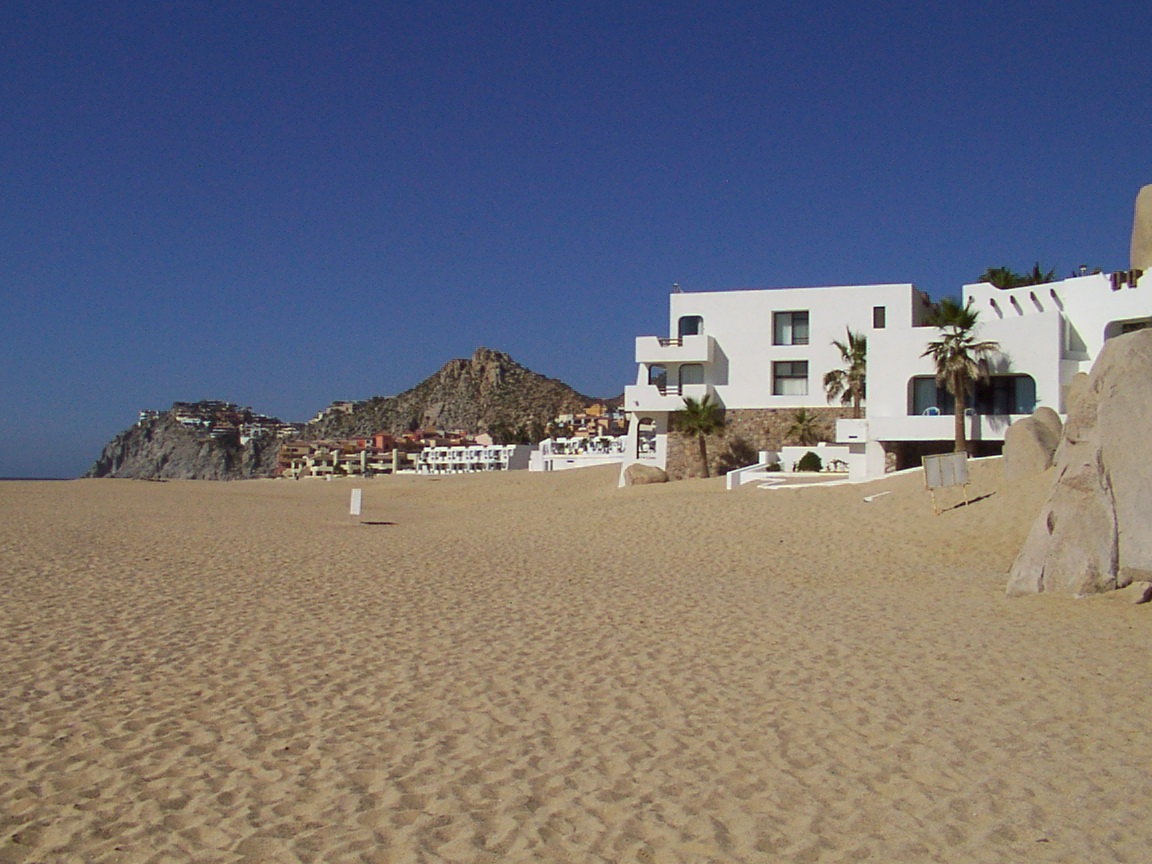
The beach is wide and flat, with a long stretch of coarse tan sand backed by low scrub and the occasional palapa or informal parking pull-off. There are no beach clubs, no chair rentals, no vendors selling coconuts. What you get is open space, ocean noise, and a view down a long undeveloped Corridor beach that contrasts sharply with the resort-front beaches a few miles in either direction.
The El Tule surf break is the main draw for surfers visiting this stretch. It's a beach break, meaning it shifts depending on sand movement and swell direction. The break tends to work best on south swells in summer, which is also the off-season for most US visitors. During winter months, conditions vary but the beach still sees occasional surfable days. Local surfers from San José del Cabo and Cabo San Lucas use this spot regularly when the Corridor breaks are pumping. If surfing is on your trip list, El Tule is worth knowing as a secondary option behind the better-known breaks at Costa Azul.
The beach is long enough to walk for 20 to 30 minutes without reaching a boundary, and during weekdays you'll often share it with very few people. Bring water, sun protection, and anything else you need because there's nothing on site. The Sierra de la Laguna foothills are visible inland from the beach, and the combination of desert scrub and open sea gives the location a genuinely remote feel despite being a few hundred meters off Highway 1.
Tidepooling is possible at the rocky points bracketing the main sandy stretch. Marine life in these zones varies by season. In low tide, you can find small crabs, urchins, and occasional sea stars in the shallower pools. The rocky sections are also where wave energy concentrates, so stay clear when surf is up.
Getting there and parking
Playa El Tule sits along Highway 1 in the Corridor, approximately 15 to 18 kilometers northeast of Cabo San Lucas and about 14 to 16 kilometers southwest of San José del Cabo. The drive from either town center is roughly 20 minutes under normal conditions. There's no formal address or marked turnoff, so look for the sandy pull-offs on the ocean side of the highway and track your position against kilometer markers.
Parking is informal: a cleared dirt area next to the highway shoulder where surfers and visitors pull off. There are no parking fees, no attendants, and no infrastructure. Four-wheel drive is not required since the pull-off is directly off the paved highway. If you're coming by taxi from a Corridor resort, give the driver the kilometer marker or a GPS coordinate rather than a beach name, since El Tule is not widely recognized among resort taxi drivers. Rideshare service in this section of the Corridor is minimal, so arrange a return pickup time with your driver or plan to walk to a more accessible pickup point.
Best time to go
November through April is the most comfortable window for visiting any Corridor beach, and El Tule is no exception. Daytime temperatures in this range run from the mid-70s to low 80s Fahrenheit, the air is dry, and afternoon winds are manageable. Mornings are the calmest time of day on exposed Pacific beaches, so arriving before 10 a.m. gives you the most reliable conditions for walking the shoreline or watching surf.
For surfers specifically, late summer and fall (August through October) can bring south and south-southwest swells that activate the El Tule break. Those months are hot and humid, with daytime highs reaching into the mid-90s Fahrenheit, and hurricane season peaks through that same window. Swells and surf are there, but the conditions for casual beach visits are less comfortable. If surfing is the goal and you're traveling in summer, early morning is the only reasonable window before heat becomes a factor.
Avoid peak midday sun from May through September if you're doing anything active on the beach. Shade is nonexistent at El Tule.
Good to know
There are no restrooms, showers, food vendors, or facilities of any kind at Playa El Tule. Pack in everything you need, including enough water for the visit, and pack out your trash. The beach stays clean largely because the visitor volume is low, and keeping it that way depends on everyone who visits.
If you're combining El Tule with other Corridor stops, it works well as a quick detour when driving between Cabo San Lucas and San José del Cabo. The pull-off is fast, the views down the open beach are immediate, and you can spend anywhere from 15 minutes to several hours depending on what you're after.
Sunset can be good from this stretch, though the elevation is low so you don't get a panoramic horizon view. El Tule is northwest-facing enough that late afternoon light hits the beach at a warm angle from roughly November through February, which makes it a reasonable spot to watch the light shift over the water without dealing with the crowds at more developed beach clubs.
Security is not a concern beyond the usual common sense: don't leave valuables visible in a parked car at an informal pull-off. Use the same precautions you'd use at any undeveloped beach parking area.
Frequently asked questions
Is Playa El Tule good for beginners learning to surf?
Not particularly. El Tule is a beach break that can produce short, punchy waves, and the lack of any surf instruction or rental infrastructure on site means you'd need to come equipped. For beginner surf lessons in the Corridor, the breaks at Costa Azul and Acapulquito (Old Man's) near San José del Cabo are better suited, with nearby rental shops and instruction options. See the surfing page for a full breakdown of Corridor breaks by skill level.
Are there any facilities at Playa El Tule?
No. There are no restrooms, no shade structures, no food or drink vendors, and no lifeguards. Bring everything you need before leaving your hotel or resort, including sun protection, water, and any snacks. The nearest services are at resort properties several kilometers in either direction.
How does Playa El Tule compare to Chileno Beach?
They're different beaches with different purposes. Chileno is a protected Blue Flag cove with calm, consistently swimmable water, shade palapas, and snorkeling. El Tule is open and exposed, with surf conditions that vary, no facilities, and no reliable swimming. Choose Chileno if you want to get in the water safely. Choose El Tule if you want open sand without the crowds or infrastructure.
Can I reach Playa El Tule without a car?
It's difficult. The beach is along Highway 1 in a stretch without consistent rideshare service. Some Corridor resort areas have shuttle services or bicycle rentals that could get you there, but you'd be riding or walking along a highway with limited shoulder space. The most practical option is renting a car, arranging a taxi that will wait, or including the stop as part of a Corridor driving day between the two towns.
Is this the same beach as Empacadora Beach?
The beach is locally known as Playa El Tule, named for the surf break at this stretch of the Corridor. Empacadora refers to a nearby historical packing facility in the area. Locals and surfers use El Tule when referring to both the beach and the break. On maps, the location appears under both names depending on the source.