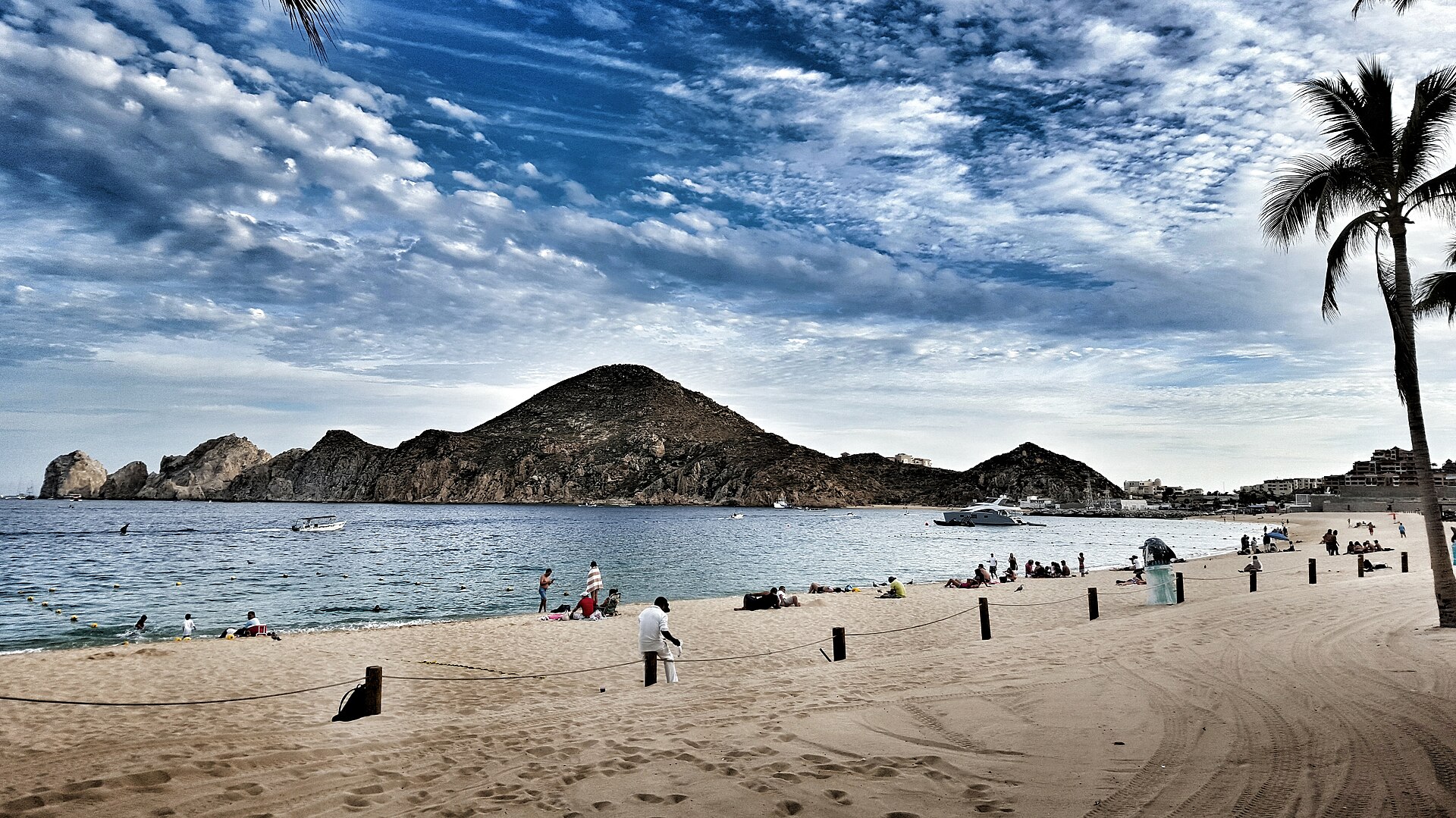
Is it swimmable?
Swimming here is possible under the right conditions, but Las Viudas earns a 'conditions-dependent' rating rather than a reliable green light. The coves face the Sea of Cortez, which is generally calmer than the Pacific side, but the shoreline here is rocky and uneven. There are no lifeguards, no flag system, and no beach staff to assess conditions for you.
When the sea is flat and glassy, typically during calmer winter and spring mornings, you can wade in carefully from the sandy pockets between the rocks. The water depth changes quickly as you move offshore, and loose rocks underfoot make entry awkward without water shoes. On choppy days, wave action against the rock formations creates surging water that makes swimming genuinely hazardous. Check conditions before you commit. If you want a guaranteed safe swim in the same stretch of Corridor, Santa Maria Beach is roughly half a mile south and is one of the most protected coves in Los Cabos.
The better reason to get in the water at Las Viudas, on a calm day with good visibility, is snorkeling. The rocky substrate supports more marine life than a flat sand bottom does. Sergeant major fish, parrotfish, and the occasional moray eel are common in the rocks just below the surface. Bring your own gear since there's no rental operation here.
What to expect
Las Viudas consists of two small adjacent coves separated by a rocky point. Each cove is roughly 80 to 100 feet across at its widest. The beach itself is a mix of coarse sand and smooth river stones, with bands of darker volcanic rock running through the shoreline. At low tide, the rock ledges on either side of the coves become accessible, and that's where the tide pool activity concentrates.
Tide pools here hold the typical Sea of Cortez inventory: hermit crabs, small urchins, sea stars, anemones, and tiny fish sheltering in the larger pool basins. Bring a pair of closed-toe water shoes and move carefully. The rocks are slippery with algae in spots, and the edges of the pools are uneven. Kids who are comfortable around tide pool environments will find plenty to explore for an hour or more.
There are no facilities at Las Viudas. No restrooms, no shade structures, no food vendors, no rental equipment, and no lifeguard. Pack everything you need before you arrive: water, sunscreen, snacks, towels, and a bag to carry out your trash. The site is small enough that any litter is immediately visible, and the beach stays clean largely because the people who find it tend to treat it well.
The terrain above the coves is dry Baja scrub: cardon cactus, brittle brush, and low shrubs typical of the Sonoran Desert coastal zone. The contrast between the rocky cactus landscape above and the Sea of Cortez below is one of the things that makes this part of the Corridor visually distinct from more developed beach areas. Las Viudas doesn't appear on most resort beach maps, and the lack of services means it stays uncrowded relative to the polished coves nearby. On a weekday morning in winter, you may have the beach entirely to yourself.
Compared to the beach options nearby, Las Viudas fills a specific niche. Santa Maria, half a mile south, offers far superior snorkeling in a protected marine sanctuary, clear water, and better sand. Playa El Tule to the north is a wider undeveloped stretch with a surf break. Las Viudas sits between those two in character: rockier than Santa Maria's sandy horseshoe, quieter than El Tule's surf crowd. It suits people who want to spend a few hours somewhere real and unhurried.
Getting there and parking
Las Viudas is located on Highway 1 in the Corridor, approximately 18 miles northeast of downtown Cabo San Lucas and about 8 miles southwest of San José del Cabo. The access point is a short unpaved road off the highway. The turnoff is easy to miss if you don't know to look for it: watch for a narrow dirt track on the east side of Highway 1 near kilometer marker 14, in the vicinity of the Santa Maria resort area.
A rental car or private vehicle is the practical option. Taxis from Cabo San Lucas to the Corridor run $25 to $45 each way depending on where you're starting from. Rideshares are not reliably available along Highway 1, so if you take a taxi in, arrange a pickup time before your driver leaves. The unpaved access road is a short drive, under a quarter mile, and passable in a standard sedan. No four-wheel-drive required, but the surface is rough enough that a high-clearance vehicle handles it more comfortably than a low sedan.
Parking is informal. There's no marked lot, just a flat open area near the cove where a handful of vehicles can park. On busy winter weekends, arrive early or you may find the space already full. The area has no lighting, so plan to leave before dark.
Best time to go
November through April covers the most reliable weather window. Daytime temperatures stay in the mid-70s to low 80s Fahrenheit, humidity is low, and the Sea of Cortez is at its calmest, which matters more here than at beaches with sand entry points. Morning visits in winter offer the best conditions: calmer seas, softer light for photography, and cooler temperatures before midday.
Tide pool visits time well around low tide, which shifts daily. Check a tide table for the Corridor before you go. A low tide of 0.5 feet or lower exposes the most interesting pool formations along the rock ledges. Mexico's CONAGUA and several marine weather apps provide Los Cabos tide predictions.
Summer months from June through October bring heat, humidity, and occasional tropical weather systems. The beach doesn't shut down, but the combination of temperatures in the 90s Fahrenheit and potential afternoon storm activity makes early-morning visits the only comfortable option. Water temperature is warmest in late summer, reaching the low 80s, so snorkelers willing to start at 7 a.m. will find comfortable conditions.
Sunset at Las Viudas is worth planning for. The coves face roughly northeast toward the Sea of Cortez, so you won't see the sun drop into the water the way you would on a Pacific-facing beach. What you get instead is the granite headlands and cactus landscape catching late golden light while the sea reflects it back. It's a quieter version of a Corridor sunset than you'll find anywhere with a beach bar nearby.
Good to know
Las Viudas is a zero-services site. That distinction matters more here than at most beaches because there's no one to ask for help if something goes wrong. Tell someone where you're going, pack a full water supply (a minimum of 32 ounces per person for a two- to three-hour visit in warm weather), and don't plan on finding shade once you're there. A small pop-up sun shelter or umbrella is worth bringing.
Water shoes are close to mandatory on this beach. The rock-and-coarse-sand mix makes walking in bare feet uncomfortable, and the slippery algae-covered ledges around the tide pools are the kind of surface that sends people to the resort clinic with twisted ankles.
The beach is public. The Corridor shoreline in Mexico is legally public below the high water line, so you have every right to be there regardless of the resort properties nearby. You may see a resort gate or fence near the road; the access track to Las Viudas runs around or past that infrastructure to reach the public beach.
If you want to see more of what the Corridor offers beyond the resorts, Las Viudas pairs well with a morning at Santa Maria for snorkeling, then an afternoon here for tide pools, before heading into either town for dinner. For a broader look at your beach options across Los Cabos, see the best beaches guide for a ranked breakdown by activity and swim quality.
Frequently asked questions
Can you swim at Las Viudas Beach?
Swimming is possible on calm days when the sea is flat and entry conditions allow for it, but Las Viudas has no lifeguards and no flag system. The rocky shoreline makes entry awkward, and conditions vary. Snorkeling along the rocks on calm mornings is the better water activity here. For guaranteed safe swimming, Santa Maria Beach half a mile south is a far more reliable choice.
Are there any facilities at Las Viudas?
None. No restrooms, no shade, no food vendors, no rental equipment, no lifeguard. Pack everything you need before you arrive: water, sunscreen, snacks, a towel, and a bag for trash. The site stays clean because visitors pack out what they bring in, so continue that pattern.
How do I find Las Viudas Beach?
Take Highway 1 through the Corridor. The turnoff is a short unpaved road near kilometer marker 14, on the sea side of the highway in the Santa Maria vicinity, roughly 18 miles from Cabo San Lucas. The dirt access track is under a quarter mile and passable in a sedan. It's easy to miss at highway speed, so slow down once you're past the Santa Maria resort area and watch for the track on the right heading toward the water.
Is Las Viudas Beach good for tide pools?
Yes, that's the main draw for most visitors who make the trip specifically to Las Viudas. The rock ledges on either side of the coves expose at low tide and hold the typical Sea of Cortez life: hermit crabs, sea stars, urchins, anemones, and small fish. Wear closed-toe water shoes with grip. Time your visit around a low tide of 0.5 feet or lower for the best access.
Is parking available at Las Viudas?
Parking is informal. There's a flat open area near the coves that holds a small number of vehicles. On busy winter weekends it fills early. No fee, no attendant. Arrive before 9 a.m. on weekends to secure a spot. The area has no lighting, so leave before dark.