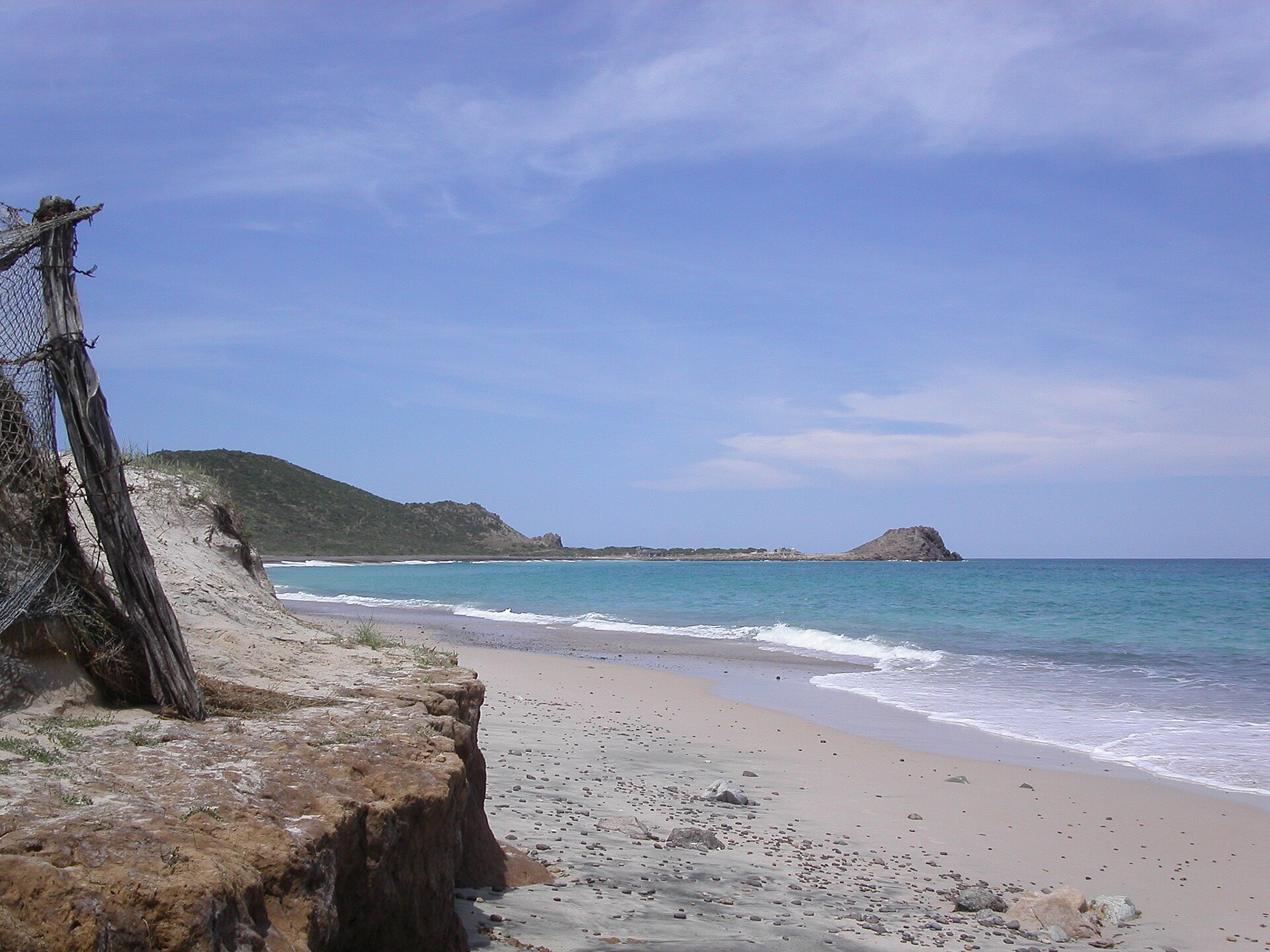
Is it swimmable?
Yes, Santa Maria is one of Los Cabos's designated safe swimming beaches. The horseshoe cove geometry does the work: the two rocky headlands wrapping around each side break the open-ocean swell before it reaches the beach, leaving the interior of the cove calm enough for comfortable swimming most of the year. The bottom drops off gradually from the shoreline, giving you a gradual wade-in rather than a sudden drop.
That said, conditions vary. Tropical storms and hurricane-season swells between July and October can push choppier water into the cove. If you arrive and the surface looks rough or visibility is low, it is not the day to snorkel. On a typical dry-season morning from November through May, the water inside the cove is as calm as a pool.
There is no lifeguard on duty here. Unlike Chileno Beach a few minutes down the highway, Santa Maria has no facilities, no flag system, and no staff watching the water. Read the cove yourself before going in. If you are not a confident swimmer, the shallows near the beach are fine for wading; stay inside the cove and keep your distance from the rocky outcroppings at the headland edges where currents can pull.
The marine sanctuary designation means no motorized boat traffic is allowed inside the cove, which is part of why the water here stays so clear. You are not swimming alongside pangas and water taxis. That protection also means you should treat the reef and its residents accordingly: no touching coral, no feeding fish, no anchoring.
What to expect
Santa Maria is a working snorkel spot, not a resort beach. There are no palapas, no beach chairs for rent, no food or drink vendors, and no bathroom facilities of any kind. What you get is a stretch of coarse tan sand, a calm cove, and an underwater environment that rewards anyone willing to show up with a mask.
The reef system at Santa Maria holds healthy coral formations at depths ranging from about 8 to 25 feet, within reach of both snorkelers and beginning divers. Species you are likely to see include sea turtles (this cove is one of the more reliable turtle spots along the Corridor), parrotfish, surgeonfish, pufferfish, moray eels tucked into rocky crevices, and schools of blue-striped grunts. The rocky headlands on each side of the cove are where marine life concentrates, so move toward them once you are comfortable.
The cove sees a steady morning rush of tour groups, primarily from resort activities desks and tour operators who bring snorkelers by boat and drop them in the water directly. Trips typically run from around 9 a.m. through noon. If you arrive independently and want the cove to yourself, get there before 9 a.m. or plan to stay into early afternoon after the tours cycle out.
For a more thorough Scuba Diving and Snorkeling experience in the region, Santa Maria pairs naturally with a guided dive trip to Chileno Bay or the outer reef systems accessible from Cabo San Lucas. Many operators run half-day multi-site trips that cover two or three locations in a single morning.
Bring everything you need with you: water, snacks, sunscreen, snorkel gear if you have it, and something to carry your belongings in. The beach has no shade infrastructure other than what you bring. A beach umbrella or a long-sleeved rashguard matters here more than at a resort beach because there is nowhere to escape the sun.
Getting there and parking
Santa Maria sits along Mexico Federal Highway 1 (the Transpeninsular Highway) in the Corridor, roughly 12 miles northeast of downtown Cabo San Lucas and about 8 miles southwest of San José del Cabo. The turnoff is a short gravel road marked with a small sign; the beach access road descends from the highway down to a dirt parking area. If you pass the Casa del Mar resort, you've gone slightly too far coming from Cabo San Lucas.
Parking at the lot is free and informal. The lot can hold 40 to 60 vehicles, but on a busy weekend morning during peak season, it fills by 9 a.m. The road down from the highway is unpaved and reasonably maintained but could present challenges after heavy rain, which is uncommon November through May.
From the parking area, a short path leads to the beach, a walk of roughly 100 to 150 meters. There is no shuttle, no accessible pathway, and the terrain is sandy and uneven in places.
If you are staying in Cabo San Lucas and do not have a rental car, the most practical option is to join a snorkel tour that includes Santa Maria on its itinerary. This is also how most visitors without transportation arrive. Driving is easier: a rental car gives you full flexibility over timing, which matters a lot at a no-facilities beach where arriving early or late makes a real difference in crowd levels. Las Viudas (Widow's Beach) is just down the road and makes a short add-on stop if you want to explore the tide pools along that stretch.
Best time to go
November through May is the prime window. Water temperatures during peak season run in the low-to-mid 70s Fahrenheit, visibility in the cove regularly reaches 30 to 40 feet on clear mornings, and the weather keeps conditions stable day after day. Early morning, before the tour boats arrive, is the best time for underwater photography and quieter conditions.
December through March is peak season across Los Cabos. Santa Maria sees its highest beach traffic during this window, particularly on weekends when resort guests from Corridor hotels make the short drive over. Arriving by 8 a.m. gives you a good chance of having the cove mostly to yourself for the first 45 minutes.
July through September brings warmer water (low 80s Fahrenheit), which some visitors prefer for comfort. Visibility can degrade somewhat when summer currents stir up sediment, and afternoon wind chop occasionally affects the cove. The trade-off for the heat and humidity is that crowds thin dramatically. If you are staying in Cabo during summer for other reasons, an early-morning visit to Santa Maria can still produce good snorkeling on calm days.
Avoid going after significant rain events. Runoff from the desert hillsides can briefly cloud the cove's water. This is rarely an issue November through June but can happen during the July through October wet season.
Good to know
Santa Maria is a federal marine sanctuary. This is not a designation that exists only on paper: the no-motor-traffic rule inside the cove is enforced, and the reef ecosystem here is measurably healthier than many accessible sites along this coast. Treat it that way. Do not stand on coral, do not handle marine life, do not remove shells or rocks.
Bring reef-safe sunscreen. Standard chemical sunscreens are damaging to coral systems, and while enforcement at this level is inconsistent, the health of this reef is directly why the snorkeling is worth making the trip. Mineral-based sunscreens are available at pharmacies in Cabo San Lucas and San José.
Snorkel gear rentals are not available at the beach. If you are joining a tour operator, gear is typically included in the trip cost, which usually runs in the range of $40 to $80 per person for a half-day multi-site snorkel trip from Cabo San Lucas. If you are visiting independently, bring your own gear or pick up an inexpensive set at a dive shop in Cabo before you go.
The beach is public access. There is no fee to enter. The Corridor resort properties nearby do not control access to this beach, though some tours operating from resort activities desks may tell guests otherwise. Walk in from the public parking area like everyone else.
If you want to combine the visit with another Corridor beach, Playa El Tule is a few minutes further along Highway 1 and offers a different character entirely: wide and undeveloped with a shore break worth checking for surfers.
Frequently asked questions
Is Santa Maria Beach safe for kids?
The calm cove is well-suited for older kids who are confident swimmers. The gradual depth and protected conditions make it more forgiving than open ocean beaches along the Corridor. For young children or non-swimmers, stick to the shallow edges near the shoreline. There is no lifeguard, no flag system, and no facilities, so you need to manage the water situation yourself.
Do I need to book a tour to visit Santa Maria, or can I go on my own?
You can visit independently as long as you have a rental car or other transportation. There is a free public parking area at the beach, and access is open to anyone. No fee, no reservation, no tour required. If you need transportation from Cabo San Lucas or San José del Cabo and do not have a car, joining a snorkel tour is the practical option, as there is no regular shuttle service.
How does Santa Maria compare to Chileno Beach for snorkeling?
Both are top Corridor snorkel spots with protected coves and healthy reefs. Chileno has facilities (palapas, restrooms, food vendors, and a Blue Flag designation) and sees generally higher foot traffic because of that infrastructure. Santa Maria has no facilities but tends to have slightly richer marine life in the reef sections near the headlands. Snorkelers with experience often prefer Santa Maria for the underwater environment; families or groups who want amenities lean toward Chileno.
What marine life can I expect to see?
On a clear morning, sea turtles are a realistic sighting at Santa Maria, not a rare occurrence. Parrotfish, angelfish, pufferfish, sergeant majors, moray eels, and schools of jacks are common. The rocky headlands at the edges of the cove hold the densest life. Visibility of 25 to 40 feet is typical during the dry season, though it can drop after rain or during periods of seasonal swell.
Is there anything to eat or drink at the beach?
No. Santa Maria has zero facilities: no vendors, no bathrooms, no shade structures. Pack everything you plan to eat or drink, including more water than you think you need. The nearest services are the resort properties and a OXXO convenience store along Highway 1 a few minutes in either direction.